%25202.avif&w=640&q=75)
7-Eleven Is Closing Hundreds of Stores: What This Turning Point Means for the C-Store Industry
7-Eleven has long been the face of the convenience store industry in the United States, with more locations than any other chain and a footprint that reaches nearly every corner of the country. So, when it announced plans to close hundreds of stores despite operating profitably otherwise, it’s easy to read that as a warning sign—one that signals trouble for the industry as a whole.
That reaction is understandable, but misses what’s actually happening. This isn’t a collapse. It’s a strategic move that offers a compelling case study into the shifts taking place within the convenience store space, as well as broader changes in retail and consumer behavior.
Store closures aren’t new in the convenience store industry. Net-negative years are a fairly regular feature and, on their own, aren’t typically a sign of deeper trouble. However, the last time a convenience store chain closed this many locations was during the industry-wide crisis of the 1990s, when tens of thousands of stores shut down. We’ve rarely, if ever, seen closures at this scale from a brand operating from a position of strength. Yet that’s exactly what 7-Eleven is doing.
The reason behind these closures is what makes this a clear outlier in the industry. The company isn’t declaring bankruptcy, and this isn’t just the result of smaller operators struggling to keep up. It’s the largest chain in the country deliberately shedding hundreds of locations as part of a strategic pivot.
So, the simple yet loaded question that naturally arises is: why?
Consumer expectations are changing, competition is evolving, and the traditional “snacks and cigarettes” convenience store model is under pressure. 7-Eleven’s response to these forces offers a clear window into where the industry is headed and what it now takes to compete.
So, rather than prepping for convenience store doomsday, it’s worth taking a closer look at what this moment actually means for the future.

Breaking Down 7-Eleven's Closures
To fully understand 7-Eleven’s goals with this move and what it means for the industry as a whole, it helps to look at the scope of the closures, what’s driving them, and where the company is headed next.
By the Numbers
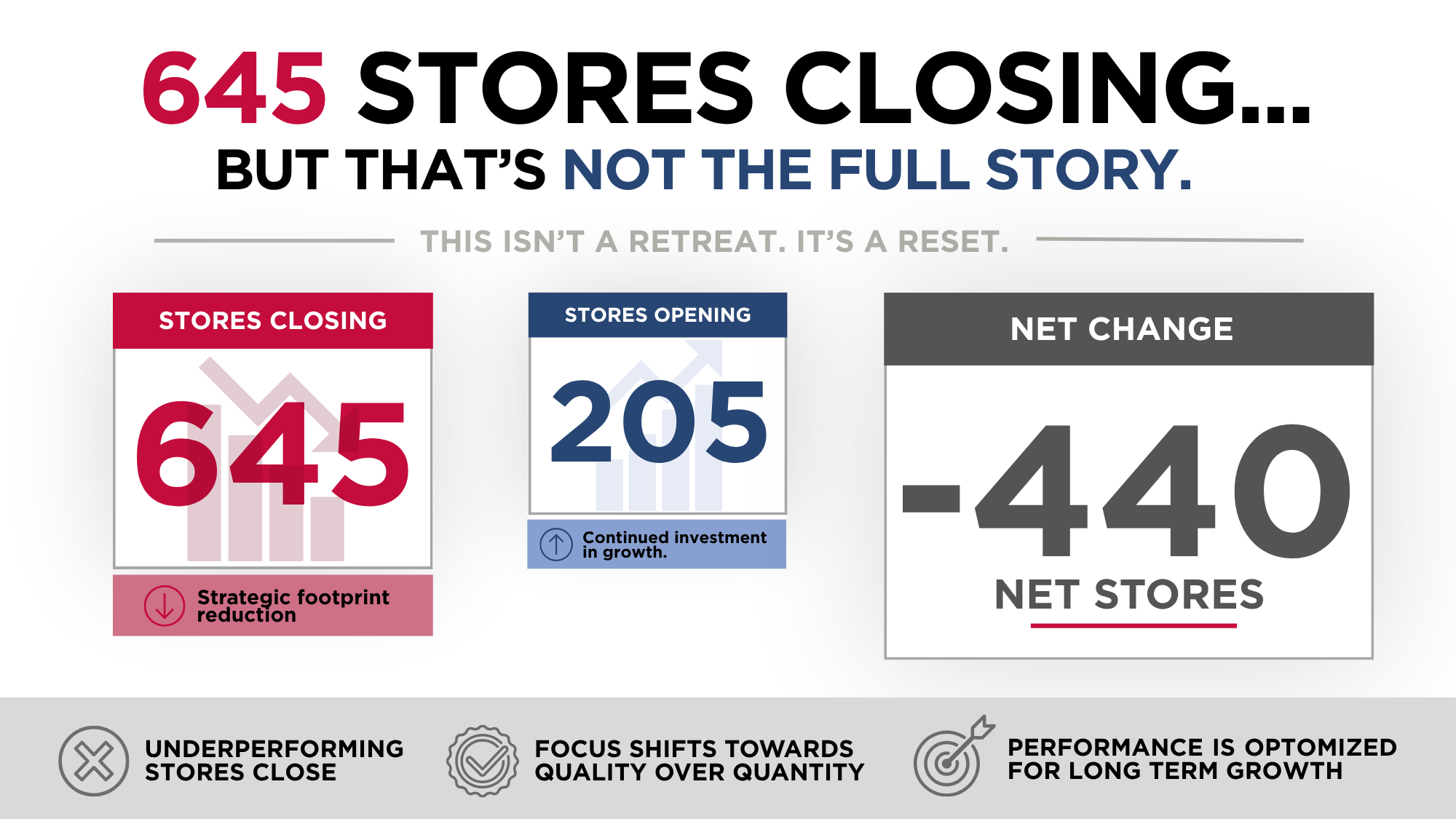
As reported by CBS News, 7-Eleven “plans to close 645 stores in North America in fiscal year 2026,” according to earnings filings from its parent company published in early April. However, that figure doesn’t tell the whole story, as the company is still opening new locations. As reported by Fast Company, “205 new stores will open in the same timeframe.” This reinforces that the move represents a reduction in overall footprint, not a full retreat. Even so, the scale is notable, resulting in a net loss of 440 stores overall.
It’s also worth noting that not every affected location is disappearing entirely. Some are being converted into a different format, allowing the company to retain part of the business at those sites. According to Newsweek, certain stores are shifting into “wholesale fuel stores,” a model that keeps fuel operations in place without maintaining a full retail convenience store.
Even with that added context, the scale of these closures is significant, which is why the announcement has sent shockwaves throughout the industry.
Driving Forces
As for the reasons behind these closures, the company itself has offered an explanation. According to CBS News, 7-Eleven’s parent company, Seven & i Holdings, noted that “although the economy remained robust, personal consumption also began to soften—particularly among low-income households, as inflation continued to weigh on spending.” In other words, while the broader economy has held relatively steady, the core convenience store customer has started to pull back.
At the same time, the company is framing these closures as part of a broader strategy. As reported by Newsweek, the move is being described internally as a “portfolio optimization,” meaning underperforming locations are being trimmed while resources are redirected toward stronger, higher-performing stores. This kind of language may sound familiar, as it mirrors the approach taken by other retailers, such as Macy's (which we covered in a previous article), where closures are positioned not as a retreat, but as a way to refocus and strengthen the overall business.
Taken together, these explanations point to a company that isn’t simply reacting to short-term pressure, but actively reshaping its footprint.
The Pivot: Moving Beyond "Snacks and Cigarettes"
So, the next question becomes: what is this new footprint being built to support?
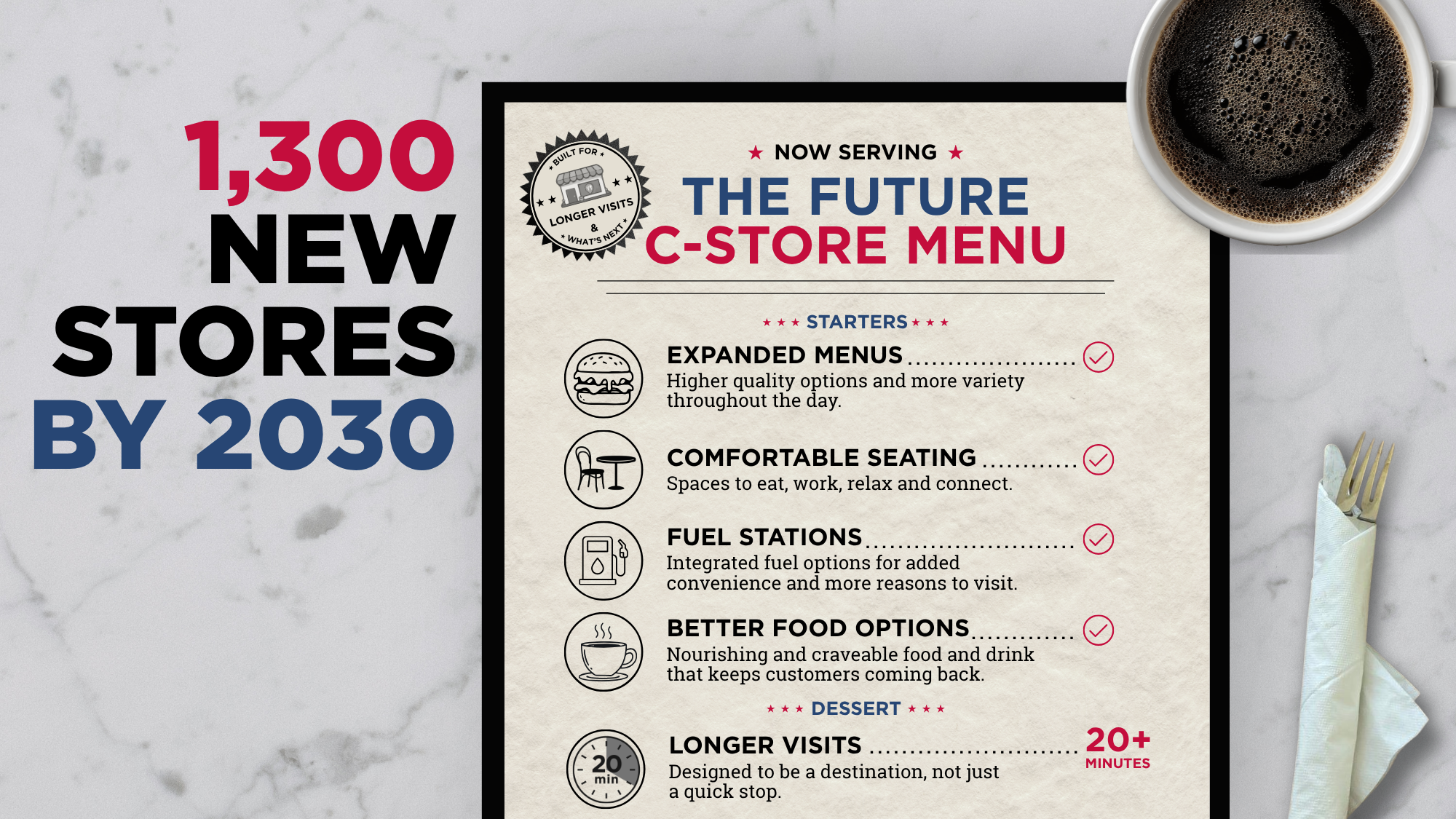
As reported by ABC News, 7-Eleven “plans to invest heavily in a new format: larger stores with expanded food menus, seating areas and, in many cases, fuel stations.” The article goes on to state that the company “has set a goal of opening 1,300 new-format North American stores by 2030.”
When the largest player in the convenience store sector makes a move like this, it’s a strong signal that something in the industry is changing. As we noted at the start, the simple fact driving this shift is that the traditional “snacks and cigarettes” model, built around quick stops and low-engagement purchases, is losing ground to stores that offer higher-quality food and a more compelling overall experience—one that encourages customers to stay longer than the typical five-minute stop of the past.
Chains like Wawa and Casey's General Stores have been at the forefront of this shift, building loyal followings by leaning heavily into fresh, made-to-order food. If these changes weren’t as significant, 7-Eleven might have been able to continue relying on its reputation. Instead, the company is making a notable shift for a legacy brand, repositioning itself to compete in a space where consumers increasingly value food, convenience, and experience together.
The Bigger Picture: The C-Store Industry
While 7-Eleven’s recent closures are nearly unheard of for a legacy brand at the top of its industry, the forces behind them are far from unique. The company’s challenges reflect broader headwinds impacting the convenience store industry as a whole.
The Numbers: A Market Under Pressure
According to data from IBISWorld, “the US convenience store market is sized at $45.9 billion in 2026, across roughly 52,116 businesses,” and “the industry has grown at a CAGR of about 4.7% between 2020 and 2025.” On the surface, that paints the picture of a healthy, growing industry.
However, that growth doesn’t tell the full story, as it masks some real stress at the store level. According to reporting from C-Store Dive, convenience retailers in 2026 are facing a difficult operating environment, defined by rising costs and softening demand. As the National Association of Convenience Store (NACS) Research’s managing director put it, “Transaction counts inside the store are flat at best.” In other words, even as the industry appears to be expanding overall, the average store is seeing less consistent customer activity.
That pressure is also beginning to show in the industry’s footprint. According to data from the NACS/NIQ industry census, “the industry shrank slightly to 152,255 stores” in 2025, “a decrease of 141 units, or 0.1%,” followed by “another small decline” to 151,975 stores in 2026. Put simply, after several years of expansion, the convenience store sector has shifted into a period of slight contraction.
Who's Winning and Why: The New Playbook for C-Stores
So, in this new market under pressure, who’s winning? It’s the chains that are adapting to what consumers actually want. Much like the previously mentioned Macy’s model, where the brand's “Bold New Chapter” focuses on modernizing the store experience to match how consumers shop today, convenience store operators making similar adjustments in their own space are finding success. In this environment, a clear winning strategy is emerging: consolidation and a stronger focus on food.
That shift is already taking shape across the industry. Some operators, taking the consolidation route, are growing through acquisition, such as RaceTrac’s $566 million purchase of sandwich chain Potbelly in 2025, a move that shows just how far convenience stores are expanding beyond their traditional model. At the same time, others are investing more heavily in fresh, made-to-order food and improved in-store experiences. Chains like Wawa, Casey’s, Sheetz, and QuikTrip have built strong followings by leaning into these areas, setting a new standard for what a convenience store can be.
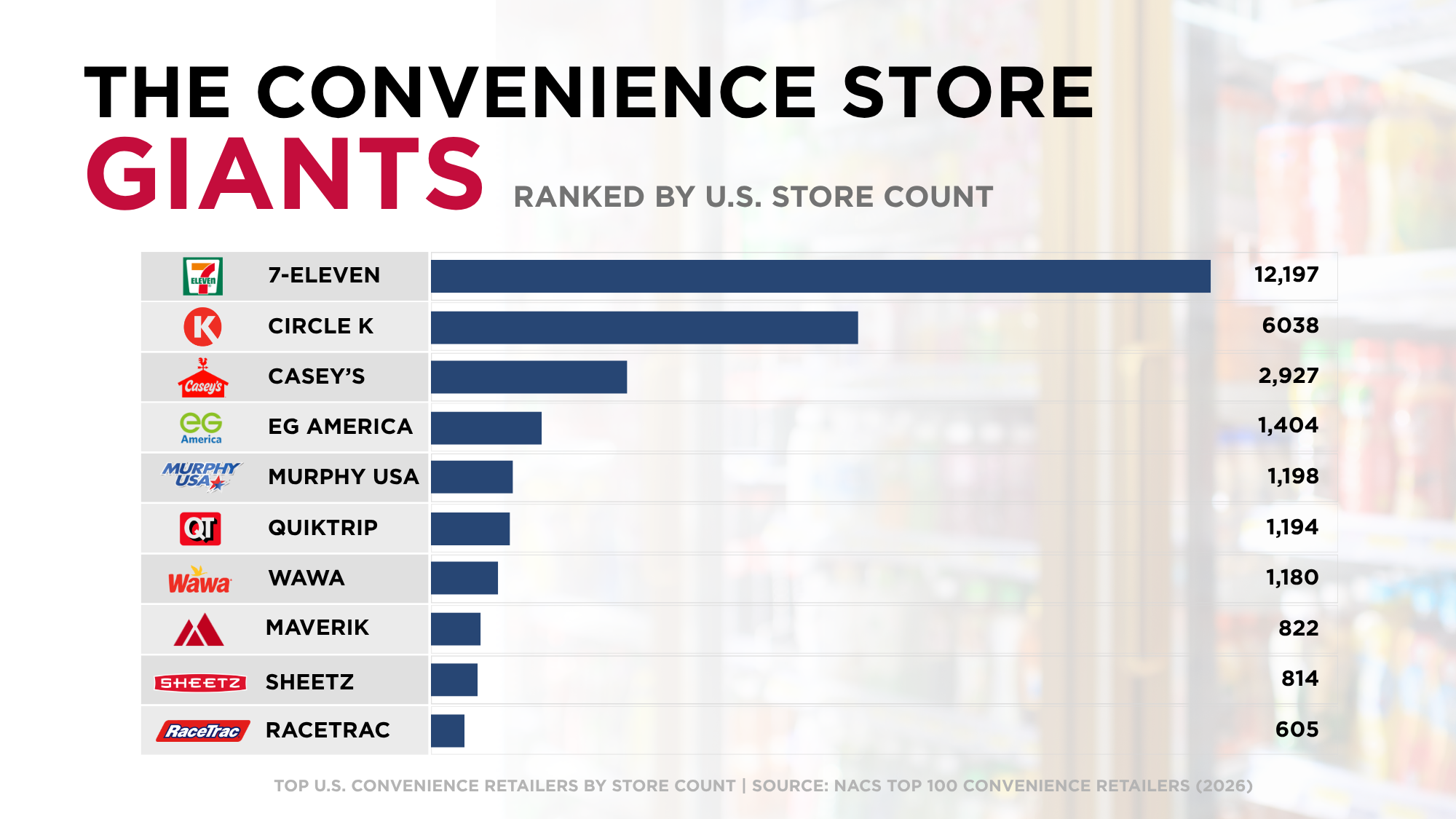
It’s important to note that even after this round of closures, 7-Eleven will remain the largest chain in the country by a wide margin. But size alone isn’t the full story. Margins remain thin, and compared to some of its competitors, the company has been slower to fully embrace this new, food-first model. The result is what we’re seeing now: a legacy brand working to catch up, even if it means shedding hundreds of stores in the process.
Brands at the Forefront: Inside the New Wave Playbook
To better understand where the industry is headed, it helps to look at the brands pushing it forward. These companies offer useful comparisons to 7-Eleven and paint a clearer picture of what today’s convenience store model is becoming.
Circle K
Circle K, operated by Alimentation Couche-Tard, is widely seen as one of the most aggressive players in the convenience store space. That reputation was on full display in 2024, when Couche-Tard made a bold takeover bid for 7-Eleven’s parent company, a move that shocked the industry. While the effort ultimately fell through in 2025, it sent a strong message that Circle K isn’t content to sit in second place—a message that was clearly heard by 7-Eleven’s leadership.
Circle K has continued to look for ways to expand its footprint and close the gap with the industry leader, whether through acquisitions or large-scale strategic moves. It’s a different approach from some competitors that have scaled back to focus on experience, but the confidence behind it reflects a clear belief that scale still matters in a rapidly evolving market.
At the same time, Circle K isn’t ignoring the broader shifts reshaping the industry. Like many of its competitors, it has been investing in improved food offerings and in-store experience, recognizing that growth today isn’t just about adding locations, but about giving customers more reason to come inside.
In that sense, Circle K represents more than one version of the new playbook—growing aggressively through consolidation and acquisition, while also improving food offerings and overall experience.
Casey's
For an example of a company leaning more heavily into fresh food, look no further than Casey's General Stores. Primarily a Midwestern chain, Casey’s has built its reputation and loyal fan base around made-from-scratch pizza, a defining part of its identity that sets it apart from traditional convenience stores.
That deliberate choice to make food one of, if not their biggest, selling points is telling for today’s c-store industry. As companies see consumer expectations shift toward higher-quality, made-to-order food, Casey’s has positioned itself to meet that demand directly. Rather than treating food as an add-on—something to grab while refueling—it’s central to the experience, giving customers a reason to choose Casey’s over more traditional quick-stop options. In some cases, customers may even drive out of their way to visit.
That focus on experience doesn’t mean the company isn’t growing. Casey’s has expanded its footprint in recent years, in part through acquisitions, and now sits at nearly 3,000 stores, comfortably in third place nationally. But unlike more aggressive expansion strategies, like we saw with Circle K, that growth is built on a clear value proposition. The strength of its food offering has helped drive demand, allowing the company to scale without losing focus on what makes it stand out.
Taken together, Casey’s is operating from a similar playbook to Circle K, but with shifted priorities. For Casey’s, food isn’t just part of the business—it’s the reason it works.
Buc-ee's
One last, and perhaps most interesting, example is Buc-ee's, which represents the most extreme version of where the industry could be heading. Rather than adjusting to the industry’s food pivot, you could argue that Buc-ee’s helped invent it, operating at the very forefront of this wave.
In terms of locations, Buc-ee’s is a blip on the radar compared to the 7-Elevens and Circle Ks of the industry, with roughly 50 locations nationwide. But they’re playing a different game: not total locations, but scale per location. According to reporting from Modern Retail, “Some of its newest stores top 70,000 square feet, almost twice the size of the average grocery store and roughly 30 times the size of a typical convenience store.” That scale translates directly into revenue, as reporting from MMCG Invest shows that each Buc-ee’s location generates “roughly 10 to 20 times the industry average” per store.
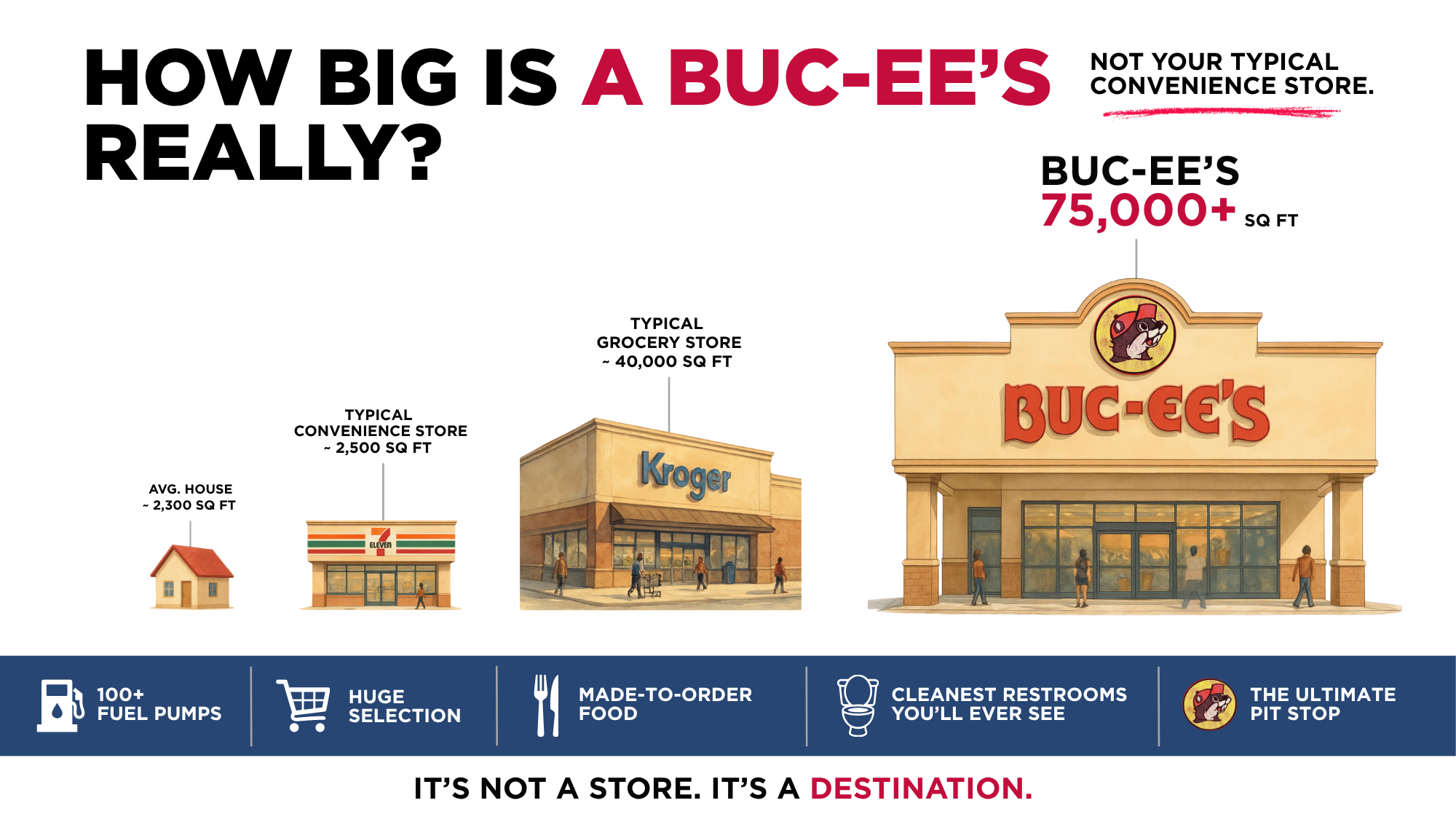
They achieve this by flipping the traditional model on its head. Data from Management Consulted shows that “Two thirds of Buc-ee's revenue comes from what they call inside sales,” meaning purchases made inside the store, not from fuel sales at the pump. This is similar to Casey’s, but taken to another level. Casey’s, while its food can make it a destination, can still be treated as a quick stop. It’s nearly impossible to do that with Buc-ee’s. It’s not a stop, it’s a destination—one where people drive out of their way to visit and spend significantly more time and money inside than at any other c-store chain.
So, why is it important to keep an eye on Buc-ee’s? While 7-Eleven isn’t going to turn into Buc-ee’s anytime soon, what it’s building with its new larger-format stores reflects the same underlying idea Buc-ee’s has been operating on for decades. With that in mind, Buc-ee’s offers a glimpse of where this new playbook can go when food, scale, and experience are pushed to the extreme. Over time, it may become less of an outlier and more representative of a new era of convenience stores—ones that function as destinations rather than simple stops.
Putting It All Together
The shifts and trends highlighted in this article caught our attention at Mid-America Store Fixtures, especially as a company that works with retailers like convenience stores every day. The c-store industry is shifting, and at MASF, we'll be watching with great interest where each unique c-store brand takes this new direction.
If you take one thing from this article, it should be that convenience stores are changing. External forces, especially evolving consumer preferences, are reshaping how they operate. We looked at several successful models throughout this article, but the commonalities are clear. The c-stores that succeed are 1) focused on consumer experience, 2) food-first, and 3) adaptable to changing trends.
So, when we opened by presenting 7-Eleven’s legitimately unprecedented move and asked why they made it, the answer is simple: because they had to.
In our 2026 State of Retail article, we concluded that companies that succeed will need strong leadership capable of adjusting to changing conditions. What we’re seeing here reinforces that idea, as even the largest chain in the convenience store space must evolve to keep up.