%25202.avif&w=640&q=75)
A Guide to Gondola Shelving: Types, Options, and What to Consider
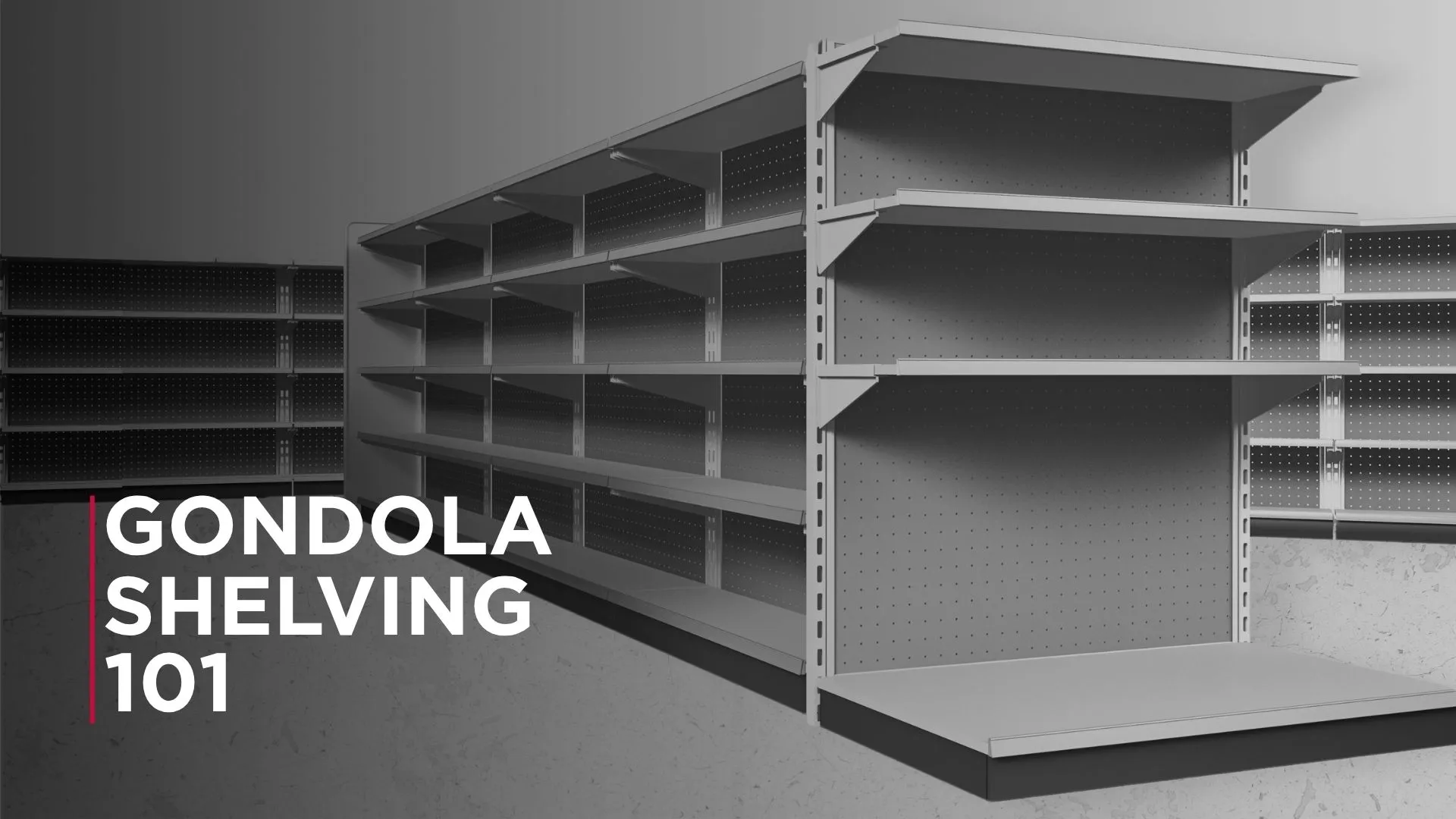
Gondola shelving plays a central role in many retail environments, and it’s something we work with every day through our display fixture installation projects and shelving refurbishment services. Over time, we’ve had many conversations with store owners and operators about what to consider when choosing the right gondola shelving for their space and overall store design, and we thought it would be helpful to bring some of our insights together in one place. This quick guide will walk through the basics of what gondola shelving is, the different options available, and what to keep in mind as you evaluate what’s right for your business.
What is Gondola Shelving?
Gondola shelving is a specialized type of retail shelving designed specifically for use on the sales floor, where how products are displayed is just as important as how they are stored. These versatile, freestanding fixtures are typically made of steel and built with a sturdy base and vertical supports that allow shelves, hooks, or other accessories to be attached, making them ideal for displaying merchandise in aisles or as standalone units.
The distinction between gondola shelving and other types of shelving lies in their unique purpose. For example, stockroom shelving and pallet racking are designed primarily for maximizing storage capacity and handling bulk inventory, so aesthetics matter significantly less than function and efficiency. Gondola shelving, on the other hand, is made for front-of-house retail environments, meaning aesthetics matter just as much as capacity and function. Gondola shelving doesn’t just store items—it helps guide customers through a space, highlight products, and create a layout that feels easy to shop in.
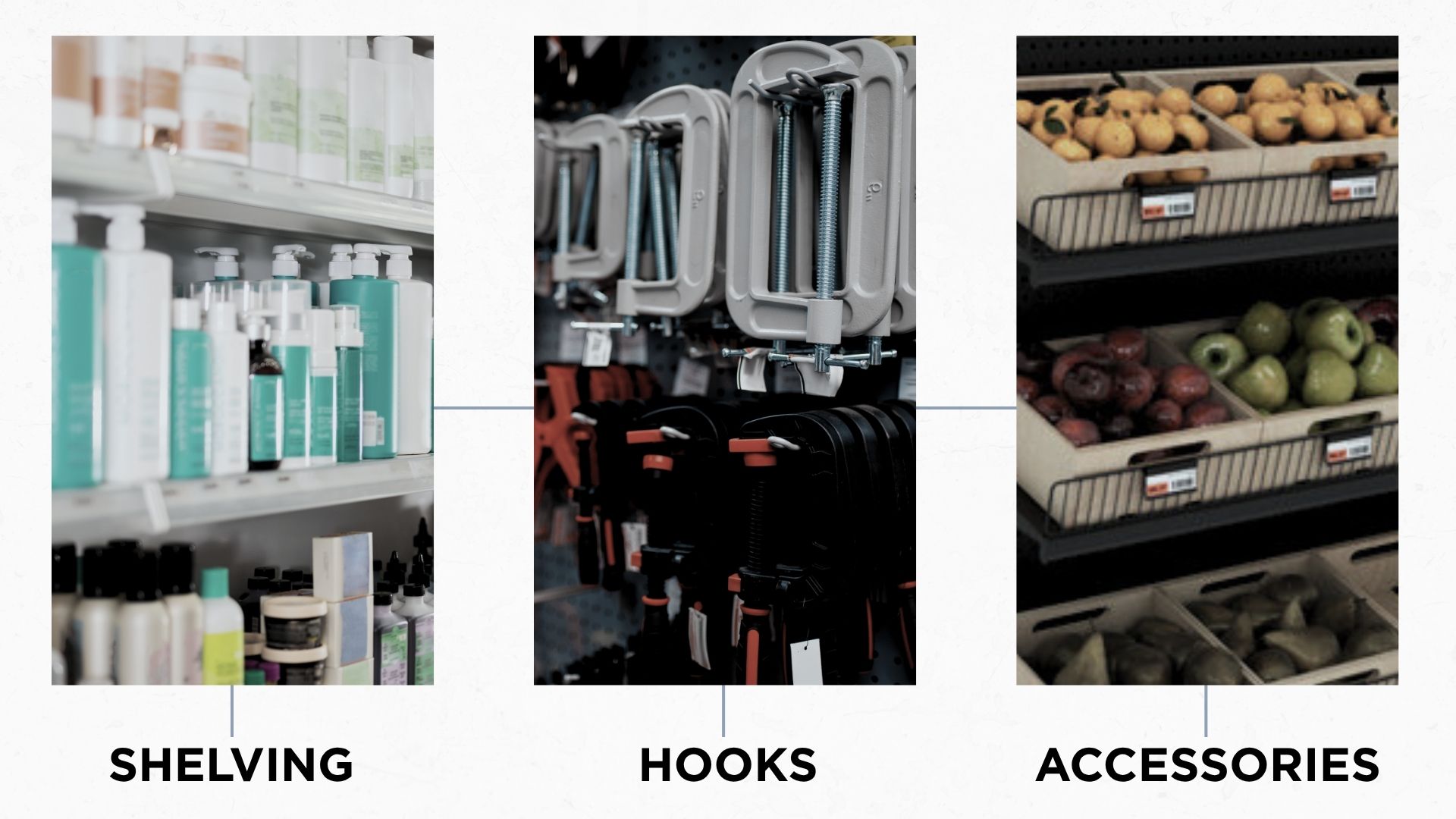
As a foundational piece of retail layouts, gondola shelving is commonly used in aisles, along walls, and as standalone displays in stores like supermarkets, pharmacies, and convenience stores.
What Types of Gondola Shelving Are There?
There are three main styles of gondola shelving: double-sided aisle units, single-sided wall units, and endcaps.
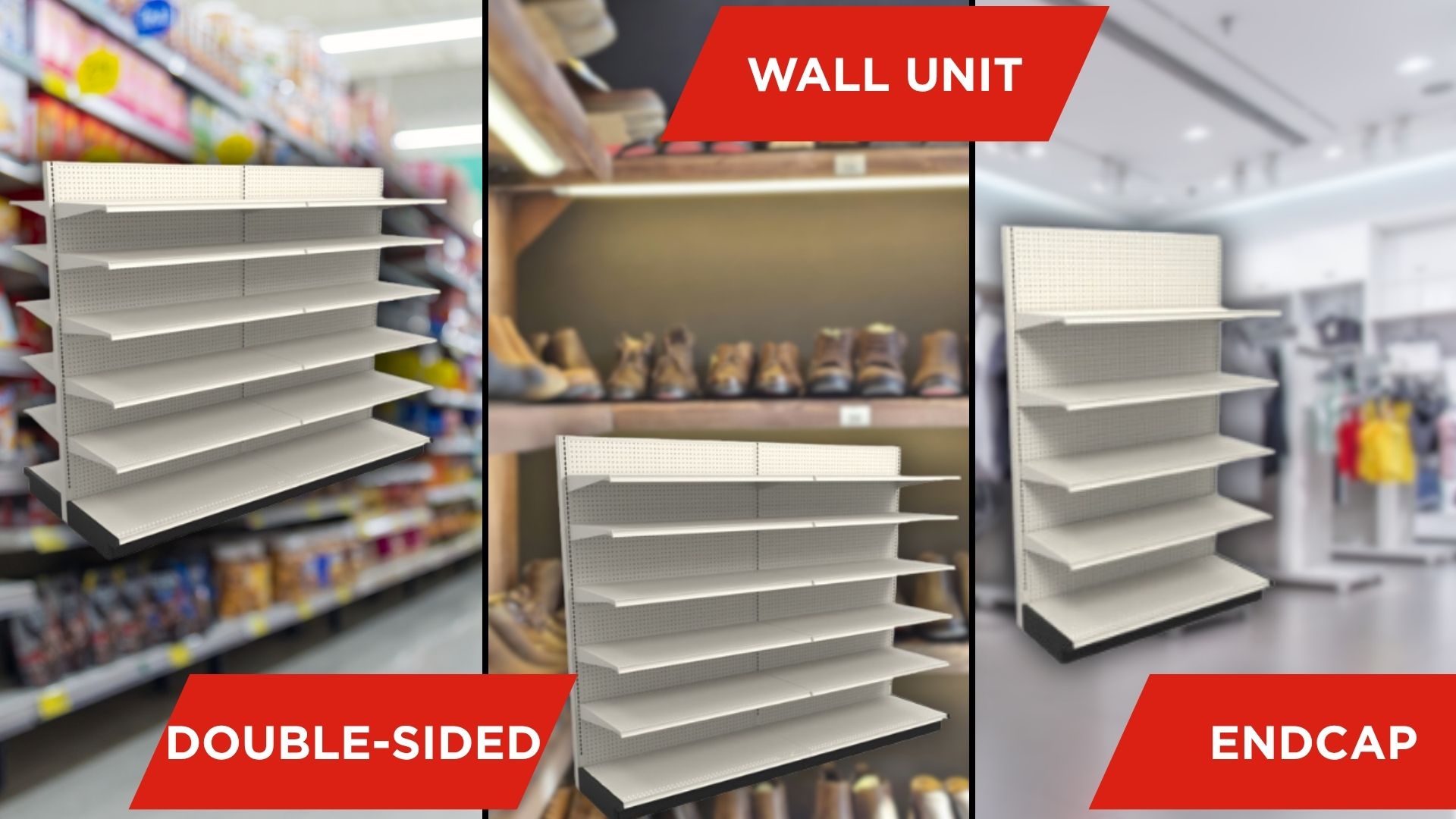
Double-sided aisle units are typically used to create rows of shelving throughout the center of a store. These fixtures allow products to be displayed on both sides, making them ideal for maximizing floor space and organizing merchandise into clear, easy-to-navigate aisles.
[Image of a single-sided wall unit]
Working alongside those, single-sided wall units are placed along the perimeter of a store. As the name suggests, they are designed to display products against walls, making use of vertical space while keeping the center of the floor open for aisle layouts.
[Image of an endcap]
Endcaps are positioned at the ends of aisle units. These are often used to highlight specific products or promotions, catching the eye of customers as they move throughout the store.
Customizations
One of the biggest advantages of gondola shelving is its flexibility. While the core concept remains consistent, there is room to adjust key elements to better fit your space and layout.
The two primary areas of customization are height and color. Shelving can be adjusted to fit specific dimensions, whether that means cutting units down, extending them, or accommodating unique sizing requirements. Color can also be tailored, allowing fixtures to better align with the overall branding, look, and feel of a store.
Because these details can have a meaningful impact on both function and presentation, we regularly work with customers to make these adjustments when possible or help connect them with the right solution when needed.
Key Manufacturers
When it comes to gondola shelving, two of the most prominent manufacturers are Lozier and Madix. While other companies continue to emerge, these brands set the standard across the retail industry, so if you’re exploring shelving options, there’s a good chance you’ll come across them.
Working with one specific manufacturer isn’t typically what matters most. What matters is finding shelving that fits your space, layout, and budget. However, in many cases, that still means working with these brands, since they are so commonly used across the industry.
As a Lozier shelving dealer, we work extensively with Lozier-compatible systems, focusing on what fits and functions properly within a given space. We’re also able to source new Lozier products when it makes sense for a project.
Pros and Cons of Buying New Gondola Shelving
While refurbishment is often the direction we recommend (more on that later), there are situations where buying new gondola shelving makes sense. For brand-new stores or complete remodels, some retailers prefer starting with entirely new fixtures to match the overall look and feel of the space. The main benefit of new shelving is the clean, uniform appearance it offers right out of the box, which is often most appealing to new or expanding businesses.
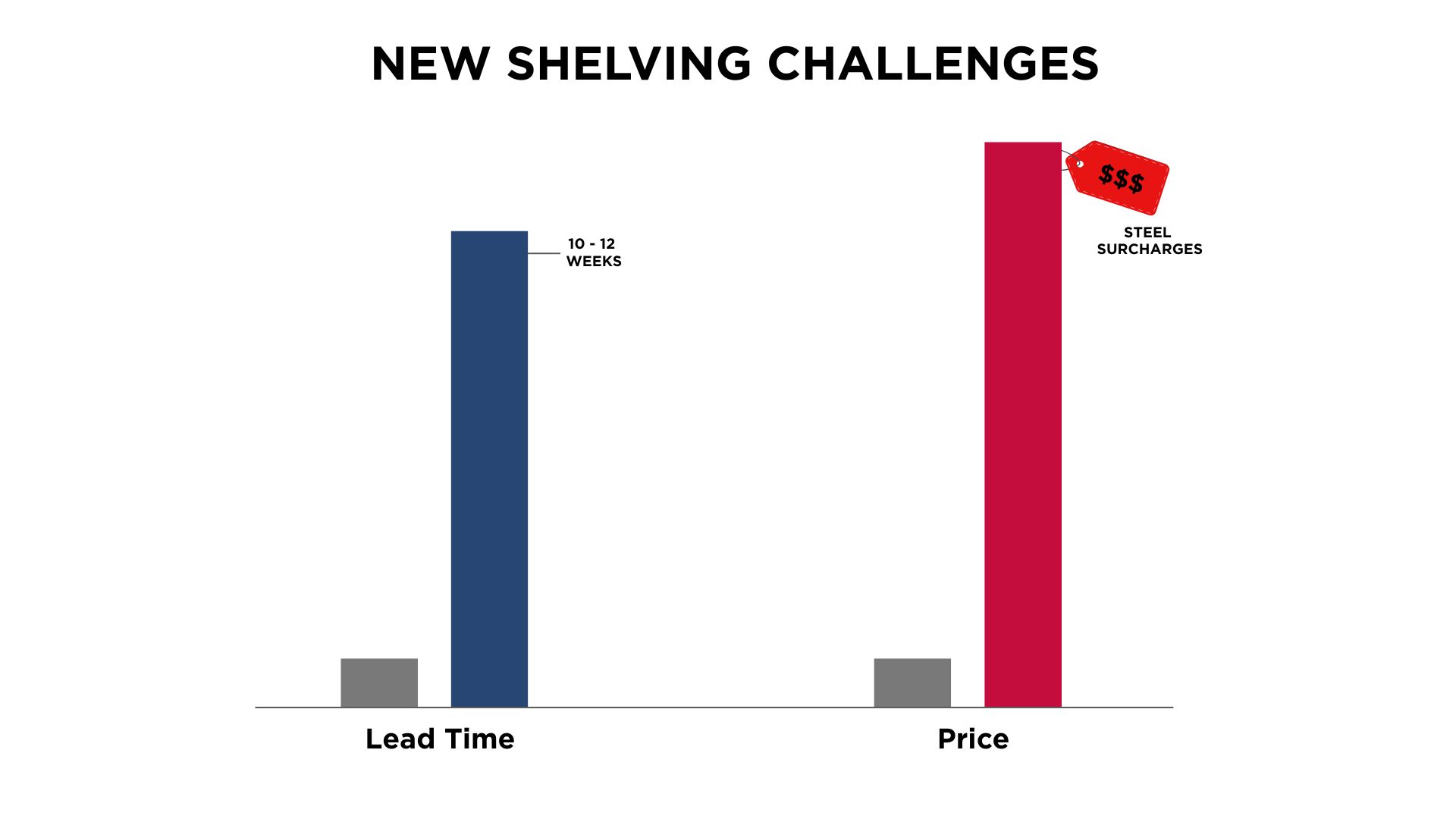
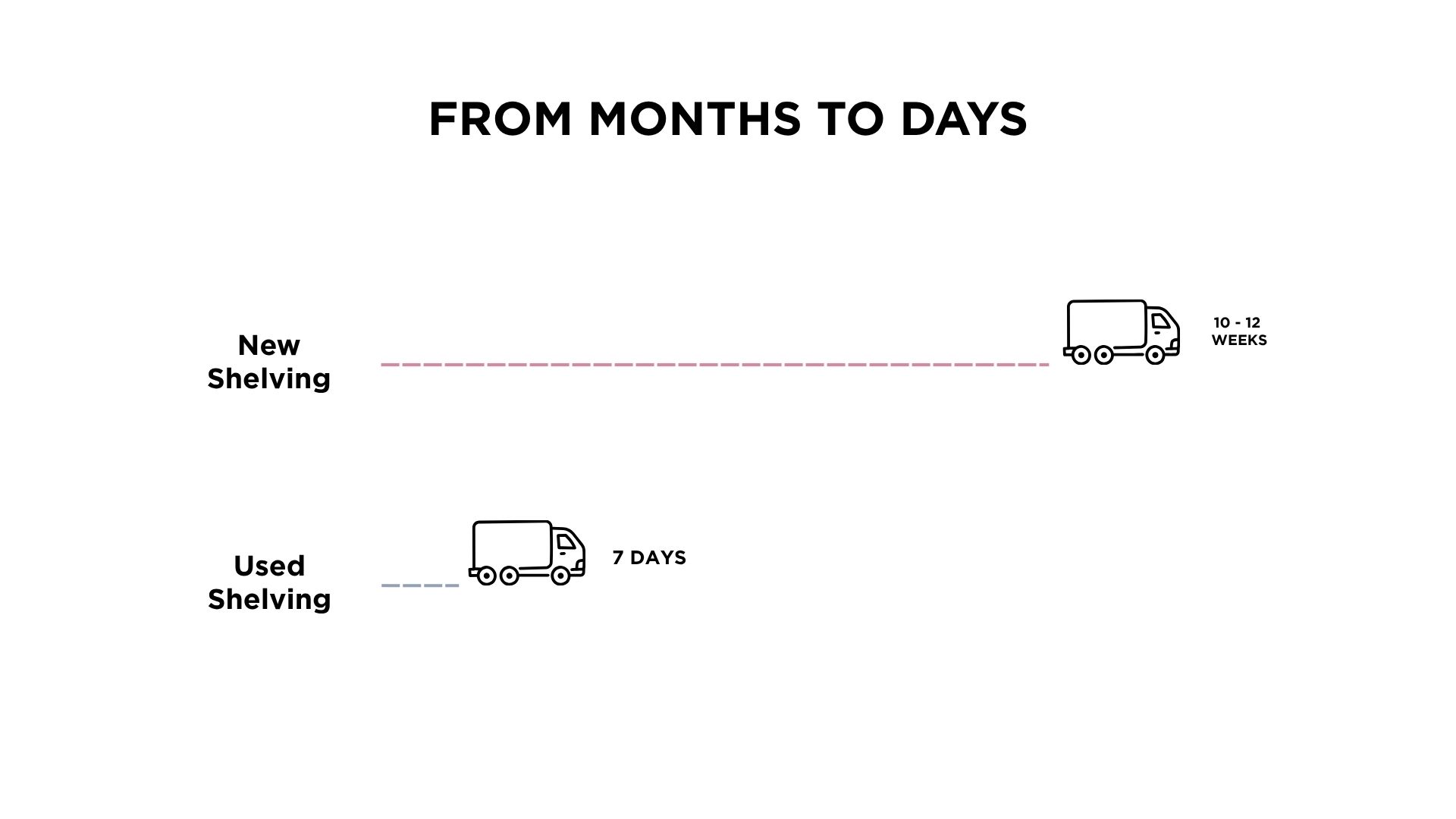
However, there are a few key considerations that come with buying new. One of the biggest is lead time. When ordering from a manufacturer, timelines are often measured in months rather than weeks. In many cases, lead times can range from 10 to 12 weeks, which can impact project schedules and delay store openings.
Another factor is cost variability. New shelving is often subject to steel surcharges, which can fluctuate depending on market conditions. This means the price you see upfront isn’t always the final price. A shelf listed at a base price may ultimately cost more once a surcharge is applied, making it more difficult to plan and budget with certainty.
While new shelving can be the right choice in certain situations, these factors are important to weigh when evaluating your options.
Pros and Cons of Buying Used Gondola Shelving
On the flip side, buying used gondola shelving helps avoid some of the biggest challenges that come with buying new. At Mid-America, if we (or one of our partners) have the units you need in stock, our lead time can be as short as 7 days. Additionally, there are no steel surcharges factored into pricing for a used unit. This makes it easier to keep projects on time and on budget, with fewer surprises along the way.
Used shelving can also offer flexibility when it comes to customization. As mentioned earlier, an excellent fixture partner can make adjustments to both height and color, allowing fixtures to better fit your space without needing to start from scratch.
That said, there are some trade-offs to consider. Because the shelving has been previously used, some level of wear is expected. This can include surface scratches, minor rust, or leftover adhesive from labels and stickers. While these imperfections are typically cosmetic and don’t impact functionality, they may still matter depending on how important appearance is to your business.
It’s also important to understand that not all used shelving is the same, as the level of wear and tear can vary. At MASF, we use a consistent quality scale and only sell shelving rated 7 or above. Whether you use our scale or your own criteria, it’s important to evaluate the condition of the shelves offered carefully and understand what you’re getting.
As with new shelving, used shelving comes with its considerations, but with its cost savings and faster turnaround, there are many situations where it’s a strong and practical choice.
The Best of Both Worlds: Refurbished Shelving
As we mentioned earlier, at MASF we strongly believe in the value of refurbishment and the solutions it provides. For many retailers, refurbished gondola shelving offers a middle ground between buying new and buying used, combining the cost savings and availability of used shelving with a finish that more closely resembles new. This makes refurbishment a practical option for a wide range of projects.
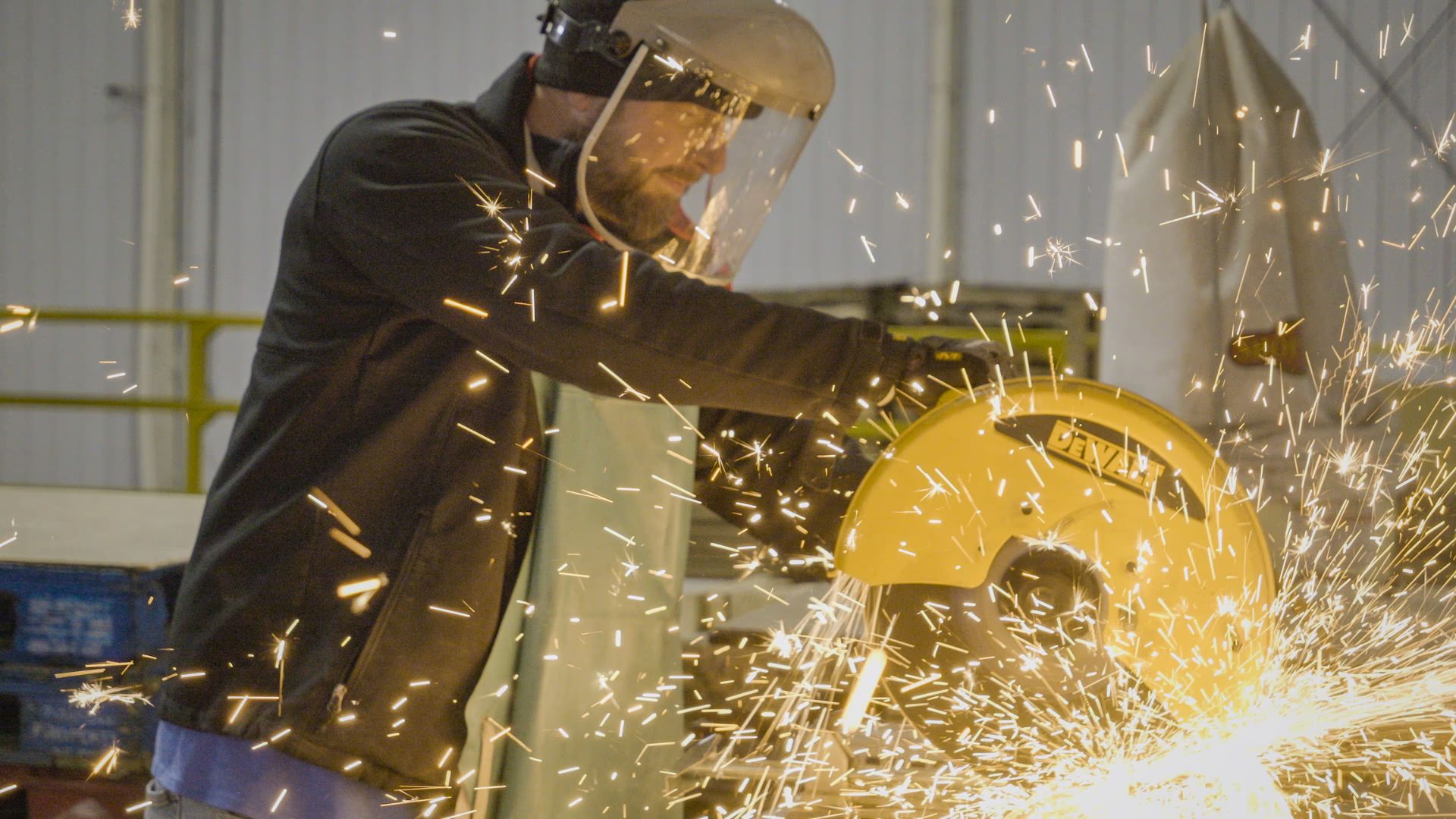
The refurbishment process starts with used shelving that meets certain quality standards. From there, fixtures are cleaned, stripped of any stickers or residue, and prepared for refinishing. Surface-level imperfections like scratches are then addressed through a powder coating process, giving the shelving a fresh, uniform appearance. The result is shelving that looks significantly cleaner and more consistent than typical used shelving, without the cost or lead times associated with buying new.
It’s important to note that refurbishment focuses on surface-level improvements. While cosmetic wear can be corrected, deeper structural issues like dents or bends may still remain. That’s why starting with quality shelving is key.
Beyond appearance, refurbishment also offers a more sustainable approach by repurposing existing materials rather than requiring new production, which can be an added benefit if sustainability is important to your brand or internal priorities.
While different factors carry more weight for different businesses, refurbished shelving is often the right fit for those looking to balance appearance, cost, and availability, which is why refurbishment is a service we proudly offer to our clients.
Putting It All Together
That said, there’s no one-size-fits-all solution when it comes to gondola shelving. Every business and project is different, so the right choice for your space will depend on the factors we’ve covered and how much each one matters to you. Whether you prioritize appearance, cost, availability, or a balance of all three, the right solution ultimately depends on your priorities.
We hope this guide provided a helpful starting point as you evaluate your options. If you have any further questions or want to talk through your project, don’t hesitate to reach out to our team—we’d be happy to help you explore your options and find the right solution.