%25202.avif&w=640&q=75)
What a Site Is Really Worth: How MASF Evaluates Liquidation Value and Costs
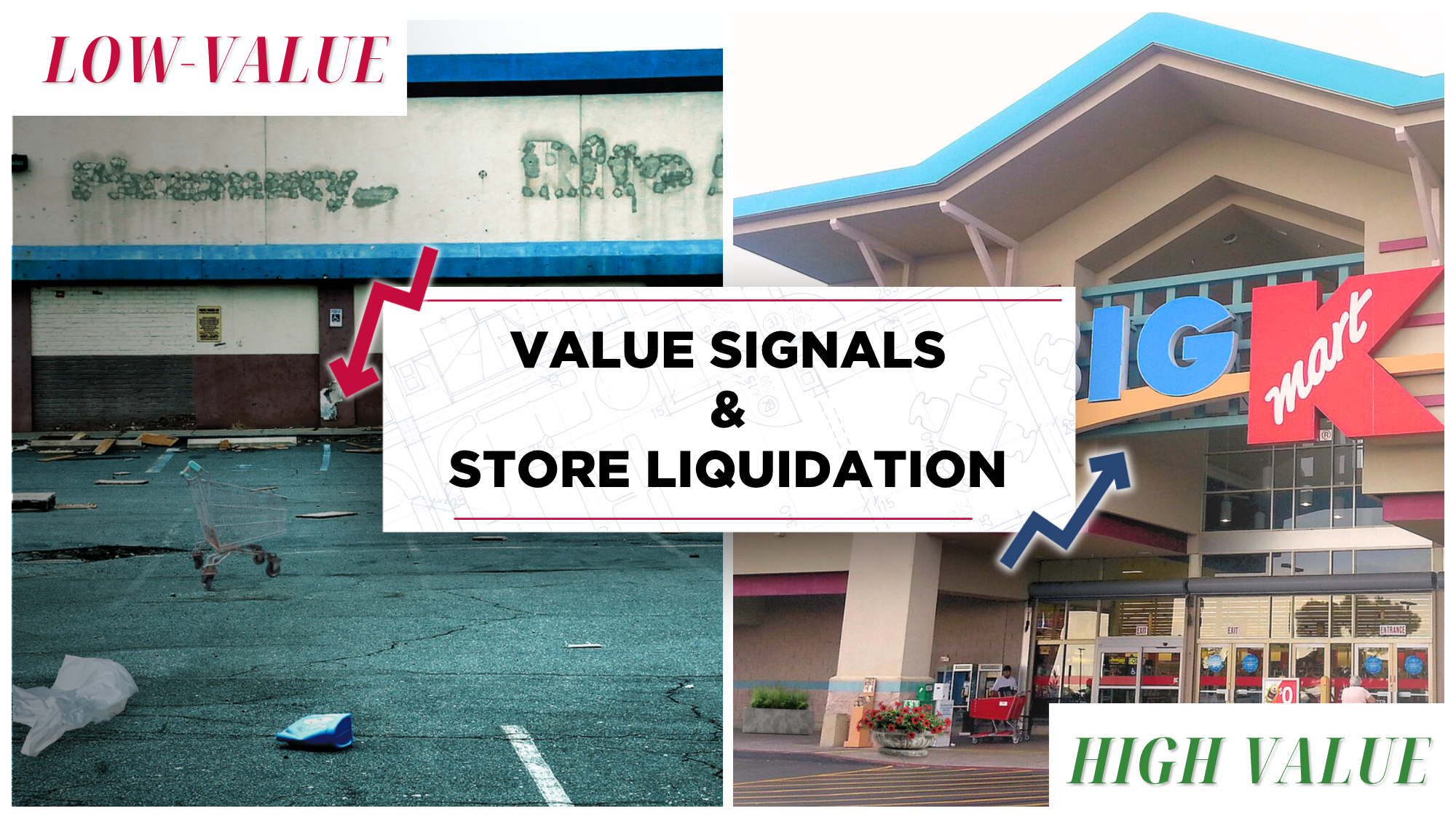
When it comes to a store liquidation or retail cleanout, every site is different. The value of a liquidation, as well as the expenses required to execute it, can vary widely based on dozens of factors—long before a single fixture is sold.
When mismanaged, that complexity can lead to confusion. From the outside, two locations can look nearly identical, yet produce completely different outcomes. Without a clear site valuation, it’s difficult to understand why.
At Mid-America Store Fixtures, we believe that this kind of uncertainty shouldn’t be part of the process. Transparency is a core part of how we operate, which is why we evaluate every site up front—so there are no surprises once a project begins. By assessing everything from the condition of the space to the value within it, we’re able to give our clients a clear, realistic picture of what to expect. This is the work we do every day.
So, in the spirit of that transparency, we’ve created this thorough overview of our process for any property managers, retailers, or landlords preparing for a decommissioning, liquidation, or cleanout of their own.
Here’s how we evaluate a site—and what actually impacts the numbers.
Phase 1: Site Exterior Factors
When starting the evaluation process, it may seem natural to jump straight to the fixtures themselves, but in order to provide the clear, accurate estimates we pride ourselves on, every factor needs to be taken into account, including the building itself. So, that’s where we start. Before we ever step inside, exterior conditions already begin to shape both the value of a liquidation and the cost to execute it.
Curb appeal and general cleanliness play an important role here. If a site is overgrown, cluttered with debris, or poorly maintained, it can impact a buyer’s willingness to show up and engage with the sale. That doesn’t always make or break a project, but it does influence value perception, which directly affects what buyers are willing to pay.
Safety and accessibility of the surrounding area are just as important. Buyers need to feel comfortable coming on-site. If the area creates hesitation for any reason, turnout can suffer, which once again directly impacts the revenue a sale can generate.
Finally, we look at how easily fixtures can be removed from the building. Features like roll-up doors or loading docks can make a significant difference. The more efficient it is to move product out, the less time and labor the project will require. Every efficiency on the way out saves money. On the other hand, limited access can slow the process down, increasing costs at every step.
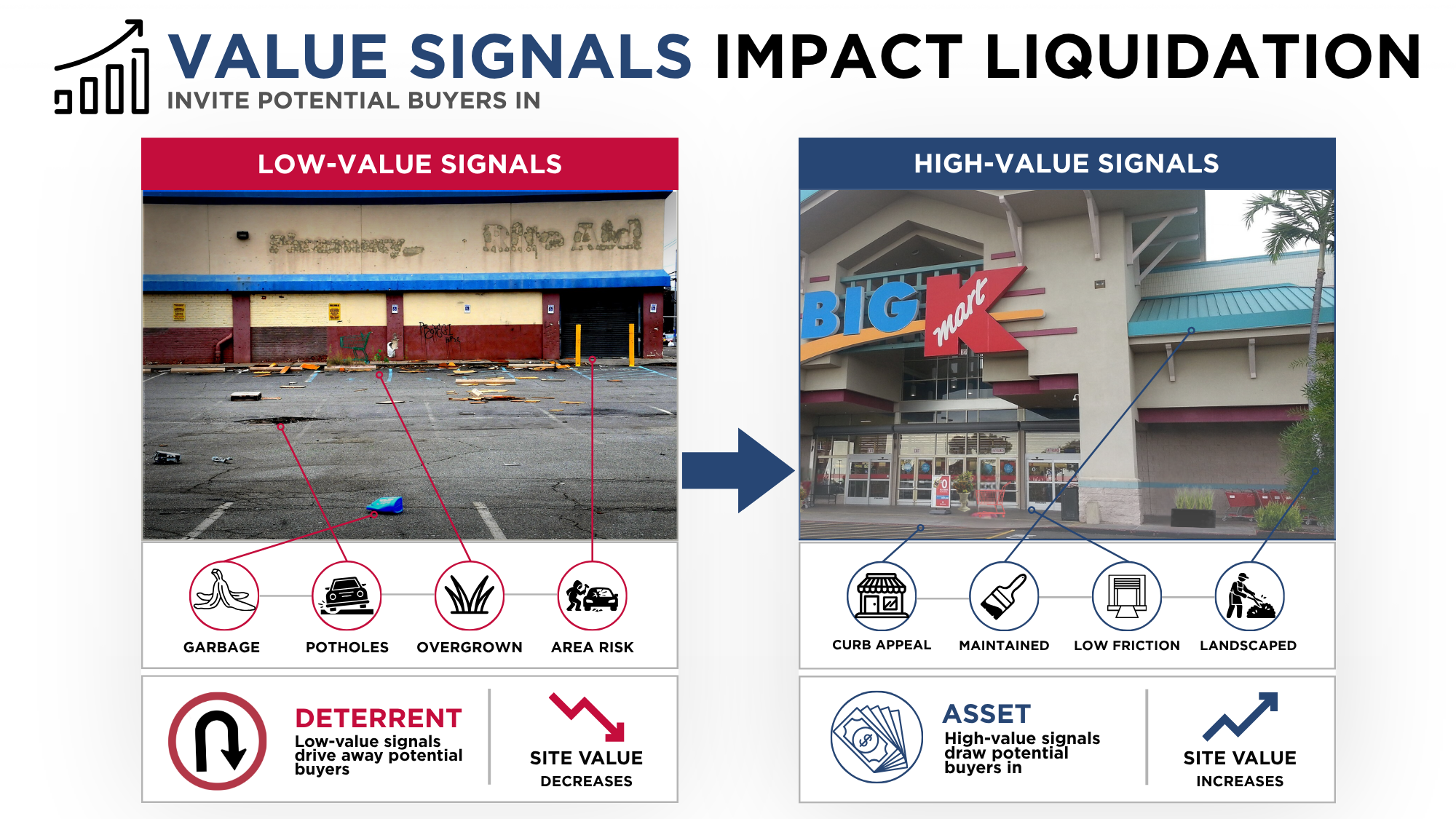
In some cases, if a location presents too many challenges, we may recommend relocating the product to another site for sale. That can improve outcomes, but it also introduces additional handling, transportation, and labor costs, which are significant added expenses.
Calling attention to these potential issues isn’t about assigning blame, especially for retailers or property managers who may not fully control the condition of the site. Rather, it’s about understanding the factors that influence turnout, buyer perception, and overall value before we give our official estimate. For those looking to get the most out of their sale, even relatively small improvements to accessibility, presentation, or organization can help create a smoother and more valuable liquidation process.
Phase 2: Site Interior Factors
Next, we step inside the building to evaluate the interior conditions. Just like with the exterior, the goal isn’t to assign blame or criticize the state of a site, but to fully understand the factors that impact labor, time, and overall cost so we can provide an accurate estimate up front. And the interior is where many of the less visible factors start to make an impact.
A few of the big questions we look to answer right away are: is there working electricity, heat, and plumbing in the building, or will those need to be supplemented? If the space isn’t fully viable, we may need to bring in equipment such as generators and portable lighting just to make the site workable. Those requirements add cost before any real work even begins.
Cleanliness, just as it is on the exterior, is another major factor. If shelves are packed with unsorted merchandise or the space is filled with debris, it adds significant man-hours. In many cases, that also means dumpster rentals and hauling, all of which get subtracted from what the client ultimately earns from the project. Situations like these are common in decommissioning, but they can often be avoided. If the store has been left in good condition and the merchandise has already been organized or removed, you avoid those extra labor costs and preserve more value from the sale.
In addition, there are often challenges within the layout of the interior that can add complexity to the project. For example, multiple floors, basements, or a series of divided rooms can make the process more costly, as moving fixtures through tight or segmented areas requires more coordination, more effort, and more time to complete the job—all of which impact time and labor costs.
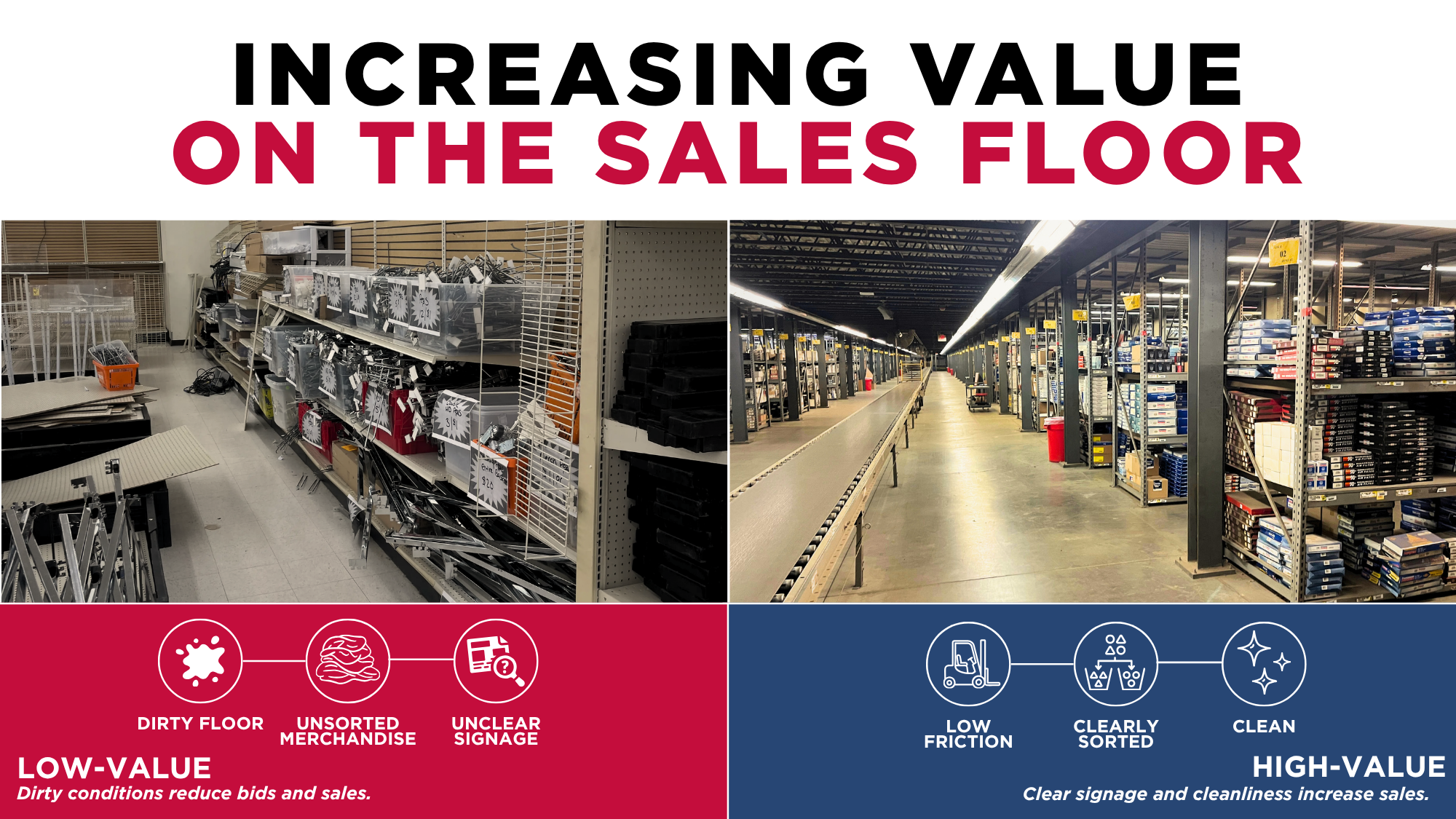
Many of the potential issues within a building’s interior are subtle, which is why an in-depth evaluation and clear communication with our clients are critical to keeping surprises to a minimum.
Phase 3: Valuing the Assets
Once we fully understand the space, inside and out, we can finally move on to the fixtures themselves, performing a value assessment on the items for sale. At this stage, instead of focusing on the factors that add cost, we’re looking at value—what the site can realistically produce.
Right off the bat, we need to know if the most valuable fixtures and equipment are still intact. In some cases, they may have already been stripped before we arrive, which means we have less to work with. If everything is intact, there’s considerably more opportunity to generate value through the sale.
From there, we evaluate the fixtures, particularly gondola shelving and pallet racking, if they are present. In addition to their condition, factors like age and brand play a major role in how well they sell. Name-brand systems, especially newer or well-maintained ones, tend to hold more value and can often be sold beyond the local market. Older or off-brand fixtures may still have value, but they’re typically more limited in where and how they can be sold, which can impact overall returns.
Refrigeration is another key factor, especially in grocery stores, convenience stores, and pharmacies. In the used-equipment market, we often use 10 years as an important valuation threshold. Once refrigeration equipment moves beyond that range, resale demand can fall sharply as buyers weigh remaining compressor life, repair costs, efficiency, and parts availability. That's why age can sometimes outweigh appearance: a well-used nine-year-old unit may attract more interest than an immaculate older unit.
Copper: A Key MASF Difference
One area where our approach stands out is how we handle copper.
In many liquidation or cleanout projects, there’s real value tied up in copper, whether it’s in overhead wiring or running through trenches beneath the floor. Where it’s located matters, as that impacts the labor required to remove it.
The difference is what happens to that value.
In many cases, the value of the copper is kept by the liquidator as part of their profit. At MASF, we take a different approach. As our team likes to say: “we won’t steal your copper.” We identify the value of the copper, account for the cost to remove it, and apply that value back to the project to help offset the overall cost.
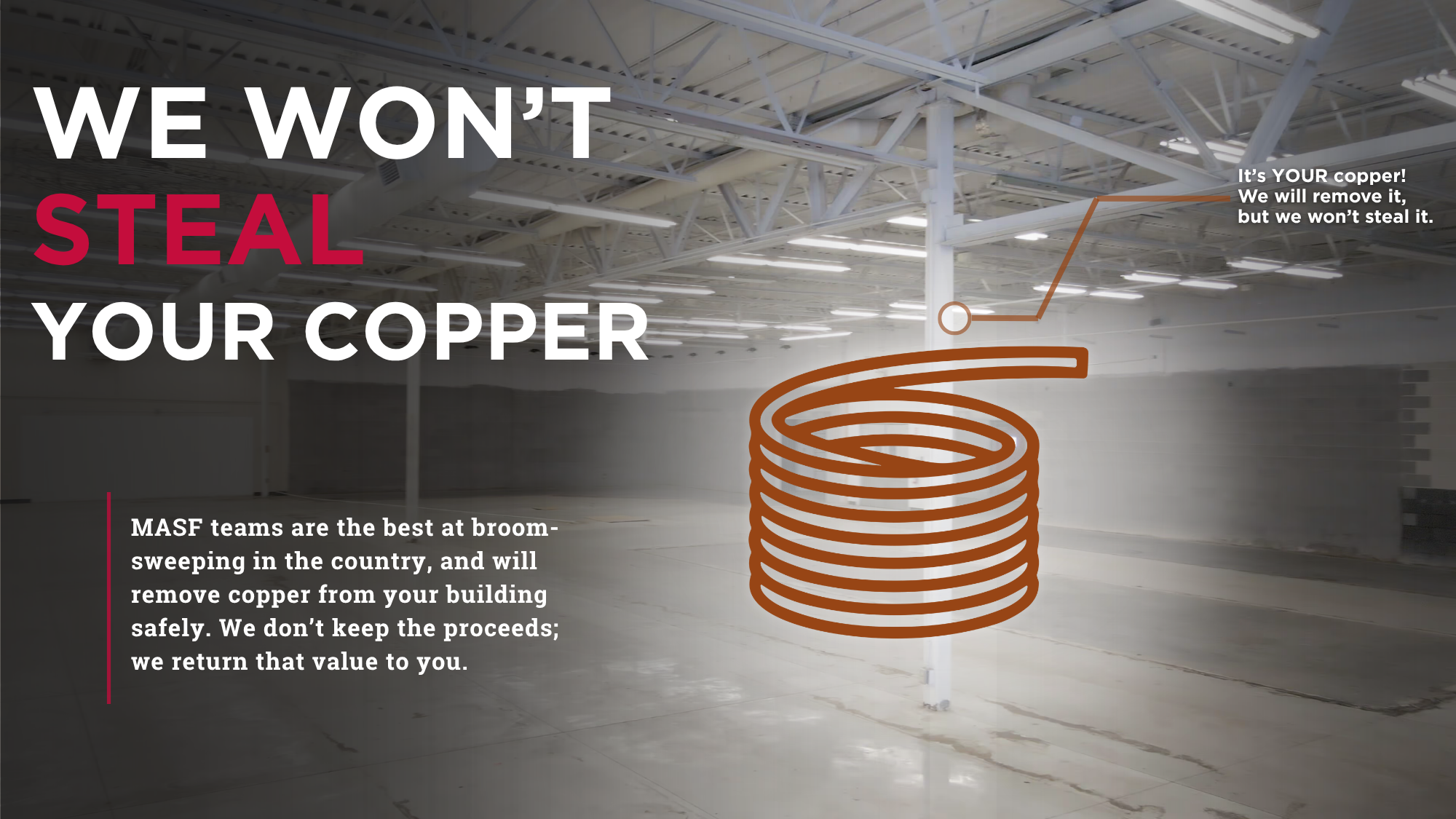
We look for ways to save our clients money at every phase, but this is one area where we consistently create meaningful savings—and one that sets us apart from many liquidators.
Phase 4: Scope of Work
Finally, we'll take a step back and look at the scope of the job as a whole. Is this a full clearout? A harvest? A scrap job? Each type of project comes with a different cost structure, driven by factors like travel, lodging, crew size, and overall timeline. Defining the scope clearly is critical because it sets the foundation for how the project will be executed and what it will ultimately cost.
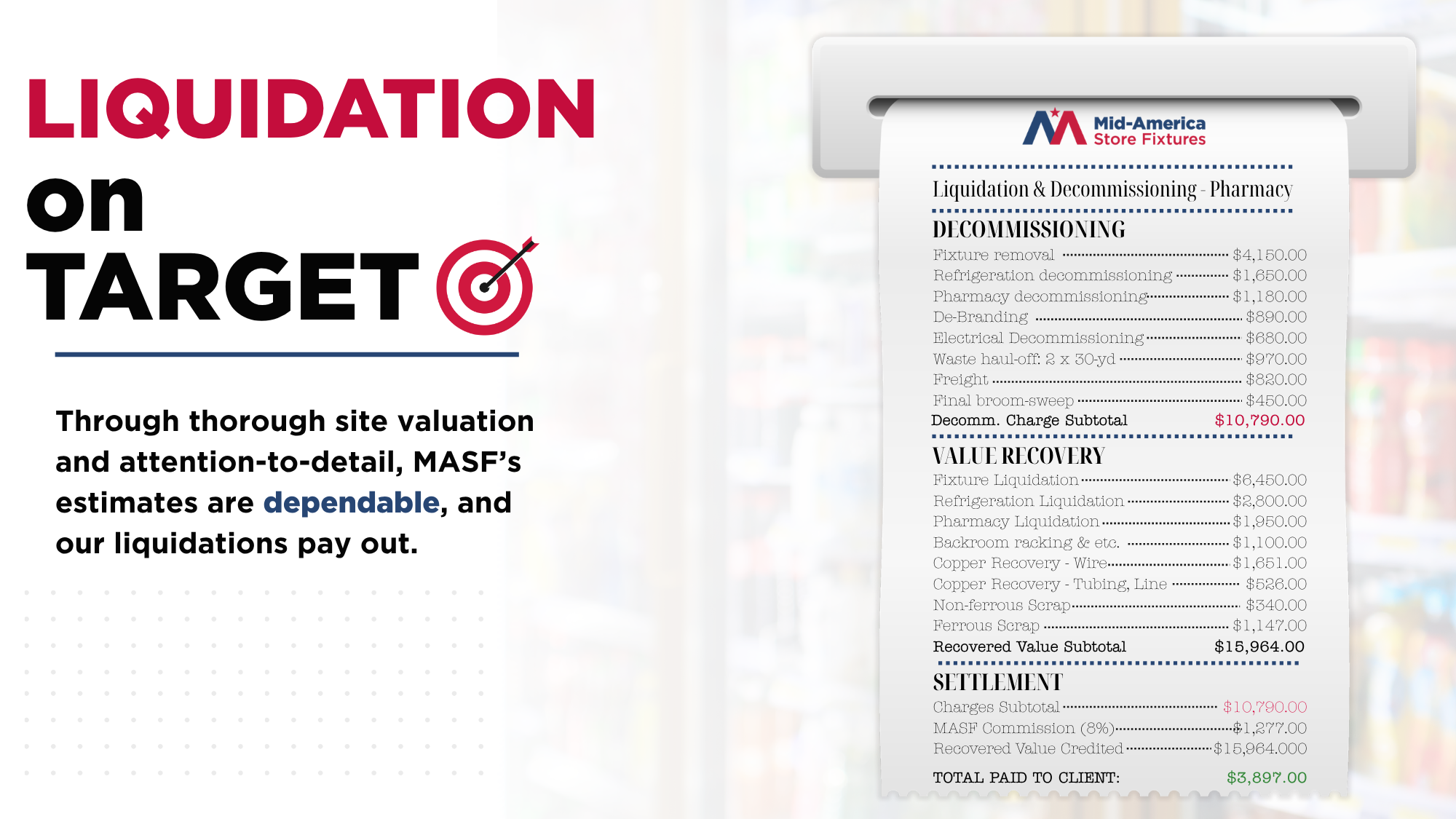
At MASF, we directly manage the crews and labor requirements for our projects, allowing us to accurately estimate labor up front. No guesswork means no surprises once the project is underway. For example, we’ve worked on Rite Aid locations where a sale might generate $6,000 to $7,000 in revenue, but the liquidation expenses for a full cleanout can land closer to $10,000 to $12,000. Because we know this going in, we’re able to build it into the fee, keeping the client informed every step of the way. Full transparency is always the goal.
The MASF difference in recovering value for our clients is found in this phase as well. In that Rite Aid example, instead of treating that $6,000–$7,000 in sales revenue as profit for our own team, we apply it directly against the cleanout costs of the project, keeping only a small commission. Just like with the copper we discussed earlier, we always go the extra mile to reduce the overall cost for our clients.
The Bottom Line
The complexity and multiple layers involved in a site valuation make it an art, one that becomes much easier with experience. At MASF, we’ve been doing this work for decades, which means we can give you an honest picture of what your location is worth and what the decommissioning process will cost. And just as importantly, we will—because transparency is a core value here. But don't just take our word for it.
If you’re looking for a partner for a liquidation or cleanout you can trust to be honest and look for every opportunity to save you money, give us a call. And if you have questions, you can count on us to give you a clear, straightforward answer.