
Death of the Corner Pharmacy or Right-Sizing? The Pharmaceutical Market in 2026
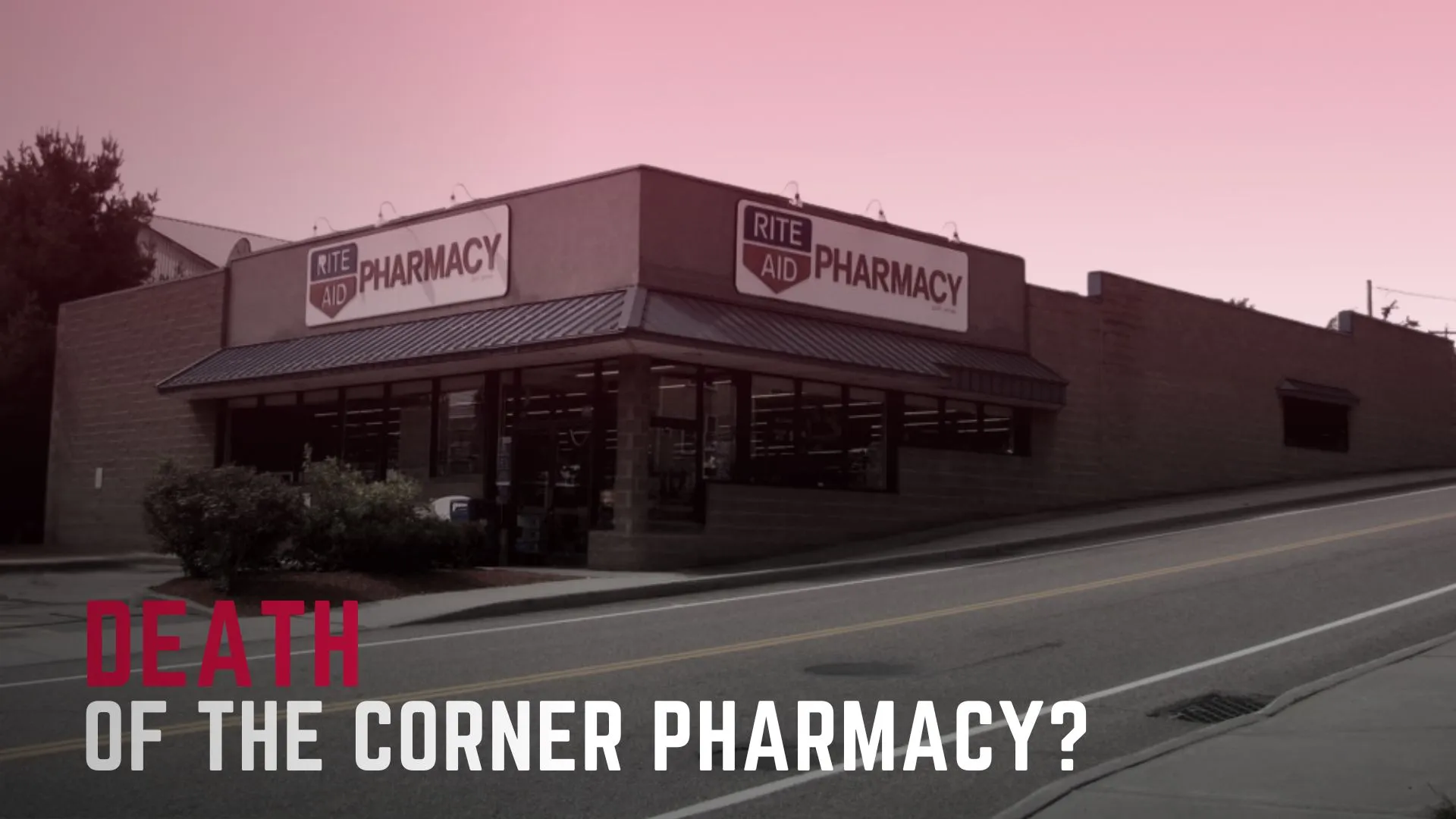
In recent years, the pharmaceutical retail landscape has seen a growing wave of store closures. Major chains like CVS, Rite Aid, and Walgreens have all announced plans to shutter locations across the country, raising an important question for both the healthcare and retail industries: is the traditional corner pharmacy disappearing?
However, as we discussed in our State of Retail in 2026 article, store closures do not always signal failure. In some cases, they are part of a broader effort by companies to right-size their operations, focusing investment on stronger locations, adapting to changing consumer behavior, and positioning themselves for long-term growth.
So, what’s really happening in the pharmaceutical industry? Are these closures a sign of deeper trouble, or are pharmacies simply adjusting to a changing market?
The Pharma Market Circa 2020
First, for context, it helps to remember what this industry used to look like.
Not long ago, the corner pharmacy was one of the most familiar fixtures in American retail. In many communities, it felt like there was a drugstore on nearly every major intersection. Large chains like CVS and Walgreens expanded aggressively through the 2000s and 2010s, opening new locations to capture convenience-driven customers who wanted prescriptions filled quickly and everyday essentials close to home.
Then came 2020 and the COVID-19 pandemic. During that time, pharmacies became an even more visible part of the healthcare system, serving as convenient locations for prescriptions, testing, and eventually vaccinations.
Their reach was enormous. Around that time, research found that nearly 90% of Americans lived within five miles of a pharmacy, highlighting just how widespread these locations had become.

But the landscape has shifted quickly. According to a 2025 ABC News report, “Nearly 50 million people in the United States—1 in 7—now live in so-called ‘pharmacy deserts,’ areas with limited access to a local pharmacy.”
That shift reflects the growing wave of pharmacy closures that is starting to draw attention across the industry. To understand what’s happening, let’s look at how those closures have unfolded among the industry’s largest chains.
Timeline of Closures
The wave of pharmacy closures hasn't happened all at once. Instead, it has unfolded gradually across the industry, with CVS, Rite Aid, and Walgreens announcing or acting on major shakeups sequentially over the past several years.
To understand how this trend developed and where it might go, let’s break down each of these major chains’ closures individually and examine the reasoning behind them.
CVS
The first major signal of change came from CVS. In November 2021, the company announced plans to close about 900 stores over three years, a move that represented nearly 10% of its U.S. retail footprint. According to reporting from Reuters, the move was designed to help CVS “adapt to changing consumer preferences by pivoting to new store formats that offer more health services.”
In addition to the closures, “the company also created a new position of chief pharmacy officer and appointed executive vice president of specialty pharmacy and product innovation Prem Shah to the role.” Analysis in that same Reuters article said, “We see this as consistent with our expected LT (long-term) strategy for CVS, moving to grow managed care and care delivery, while shrinking legacy bricks-and-mortar retail business.”
CVS followed through on its plan, completing the three-year closure program in 2024.
But even after that initiative wrapped up, closures continued. In 2025, CVS confirmed it would shut down another 270 locations nationwide, extending the downsizing effort. As part of that announcement, a CVS spokesperson said, “we’re realigning our retail footprint, reducing store density and optimizing our existing stores and pharmacies.”

At first glance, CVS’s wave of closures might look like a panic-driven response to industry pressure, but the company has repeatedly framed the moves as a calculated effort to reshape its store network to better align with shifting consumer and healthcare demands.
Rite Aid
Not long after CVS announced its closure plans, Rite Aid followed suit, though the circumstances surrounding its closures looked notably different. In October 2023, the company filed for Chapter 11 bankruptcy protection, beginning a restructuring process that included store closures and major financial changes.
As part of that announcement, Rite Aid said going through Chapter 11 would help “significantly reduce the company’s debt” while helping to “resolve litigation claims in an equitable manner.” These litigation claims were tied to Rite Aid’s alleged role in the opioid crisis.
The company also announced new financial backing during this period. According to the Associated Press, Rite Aid “reached an agreement with some key creditors on a financial restructuring plan to cut its debt. The company also said it obtained $3.45 billion in fresh financing from some of its lenders, which will help support the company through the Chapter 11 process.”

Even more, Rite Aid began selling off parts of the business during this period. They “reached a deal to sell its small pharmacy benefits manager, Elixir, to MedImpact Healthcare Systems,” a move that highlighted the lengths the company had to go to stabilize its finances, breaking apart pieces of its operations in the process.
While the company, much like CVS, framed these moves as restructuring, the scale of the financial pressure and shakeups undertaken by Rite Aid makes it harder to present these moves with the same confidence as its aforementioned competitor. Filing for Chapter 11 bankruptcy, selling parts of the business, and requiring assistance to reduce its debt paints a picture more aligned with a company with its back against the wall.
Walgreens
The most recent domino to fall in this wave of pharmacy closures is Walgreens, which has been facing economic uncertainties—stemming from many of the same pressures CVS and Rite Aid have been facing—since around 2024. According to reporting from The Street, “This, in part, led to the public company’s transition to become private via an acquisition.”
This acquisition, made by Sycamore Partners in August 2025, has led to a series of closures and layoffs. According to Healthcare Finance News, “Walgreens' footprint was approximately 8,000 locations and 211,000 workers as of January, down from 8,500 stores and 220,000 employees at the time of the acquisition by Sycamore Partners.”
As we’ve seen in the previous examples, public comments reported by The Street give insight into the reasoning behind these moves. First, Mike Motz, who recently took over as Walgreens’ new CEO, said “As a private organization, alongside our dedicated team members, we are renewing our focus on our core pharmacy and retail platform, our stores, and our customer experience — building on the progress that’s been made.” Stefan Kaluzny, Sycamore’s managing director, added that “Walgreens benefits millions of Americans, and I am confident that, enhanced by the flexibility of operating as a private standalone organization, it can move with certainty, speed, and focus to deliver meaningful value to its customers.”

These comments echo much of what we heard from CVS and Rite Aid, positioning this as a long-term right-sizing effort focused on closing underperforming stores and refocusing investment. However, further insight can be found on Walgreens’ own website. On a page designed to help customers whose local pharmacy has closed, the company directs patients to manage or transfer prescriptions online, saying:
“If another nearby Walgreens pharmacy isn’t an option…Select from multiple delivery options when you submit your refill request online.”
This aligns with reporting from Healthcare Finance News, which notes that “retail pharmacies have faced challenges from…consumers shifting to more online shopping.”
This adds another layer to the story, one that warrants further discussion. Let’s examine how online pharmacy services are reshaping the market.
From the Corner Pharmacy to Home Delivery
It's hard to overstate the impact of the shift the pharmacy industry is facing with the rapid growth of home prescription delivery. Healthcare Finance News acknowledges this shift. Of major retailer Amazon, they said, “Amazon Pharmacy recently announced it is expanding same-day prescription delivery to close to 4,500 cities this year. This will add nearly 2,000 new communities to expansion efforts that began in 2024 in New York City and greater Los Angeles.”

The competition in this space is growing quickly. According to the same report, “Amazon is competing against Walmart, Optum Home Delivery, Cigna Express Scripts, and CVS Caremark in the home drug delivery business.”
It’s easy to understand why this could spell trouble for traditional brick-and-mortar pharmacies. As part of their restructuring strategies, many chains have invested more heavily in online delivery, following a shift in consumer demand. However, they face steep competition from companies like Amazon, whose core business is built around logistics and online fulfillment, making it difficult to carve out space in this market. This could be a major reason we’re seeing this wave of closures.
For consumers, the appeal of these services is obvious. Instead of driving to a pharmacy and waiting in line, prescriptions can now be ordered online and delivered directly to the home, often within a day. For many customers, especially those managing ongoing medications, this convenience is difficult to ignore.
For the industry, however, the implications are much larger. The traditional corner pharmacy model was built on accessibility and location, with stores placed close to neighborhoods and shopping centers. As prescription fulfillment increasingly moves online, that physical proximity becomes less essential.
This doesn’t mean brick-and-mortar pharmacies are disappearing entirely, but it does suggest the massive retail footprints built over the past two decades may no longer be necessary in the same way they once were.
Conclusion
So, after weaving through this timeline of closures, bankruptcies, consumer shifts, and more, we ask: is the traditional corner pharmacy disappearing, or is this simply right-sizing?
The answer may sound unsatisfying, but as is the case with nearly all situations like this, it isn’t definitively yes or no. It’s nuanced.
Reporting surrounding these closures is filled with language about right-sizing, refocusing, and long-term strategy. And while there is no reason to doubt those intentions outright, it’s difficult to ignore the mounting pressures the market is facing, including rising operational costs, legal and financial challenges, and especially the growing influence of online prescription delivery. In many cases, it can be difficult to determine which decisions are purely strategic and which are reactions to those pressures.
However, there is one conclusion we can return to, the same one we discussed in our 2026 State of Retail article: leadership matters.
What will ultimately determine how successfully these companies navigate this period of change will come down to the decisions made by their leadership teams. How confident are they in their strategy? How clearly are they communicating these changes? And most importantly, are the decisions being made with a clear, long-term vision?
With so many pharmacy chains facing similar pressures, leadership may ultimately be the real differentiator.
So, when asking whether the traditional corner pharmacy is disappearing, the better question might be how the industry will adapt. Retail has always evolved, and the pharmacy sector will likely be no different. The companies that adapt the fastest will be the ones that come out strongest on the other side.