%25202.avif&w=640&q=75)
From $500K Loss to $100K Gain: How MASF Helped Property Owners Reclaim a Massive Warehouse
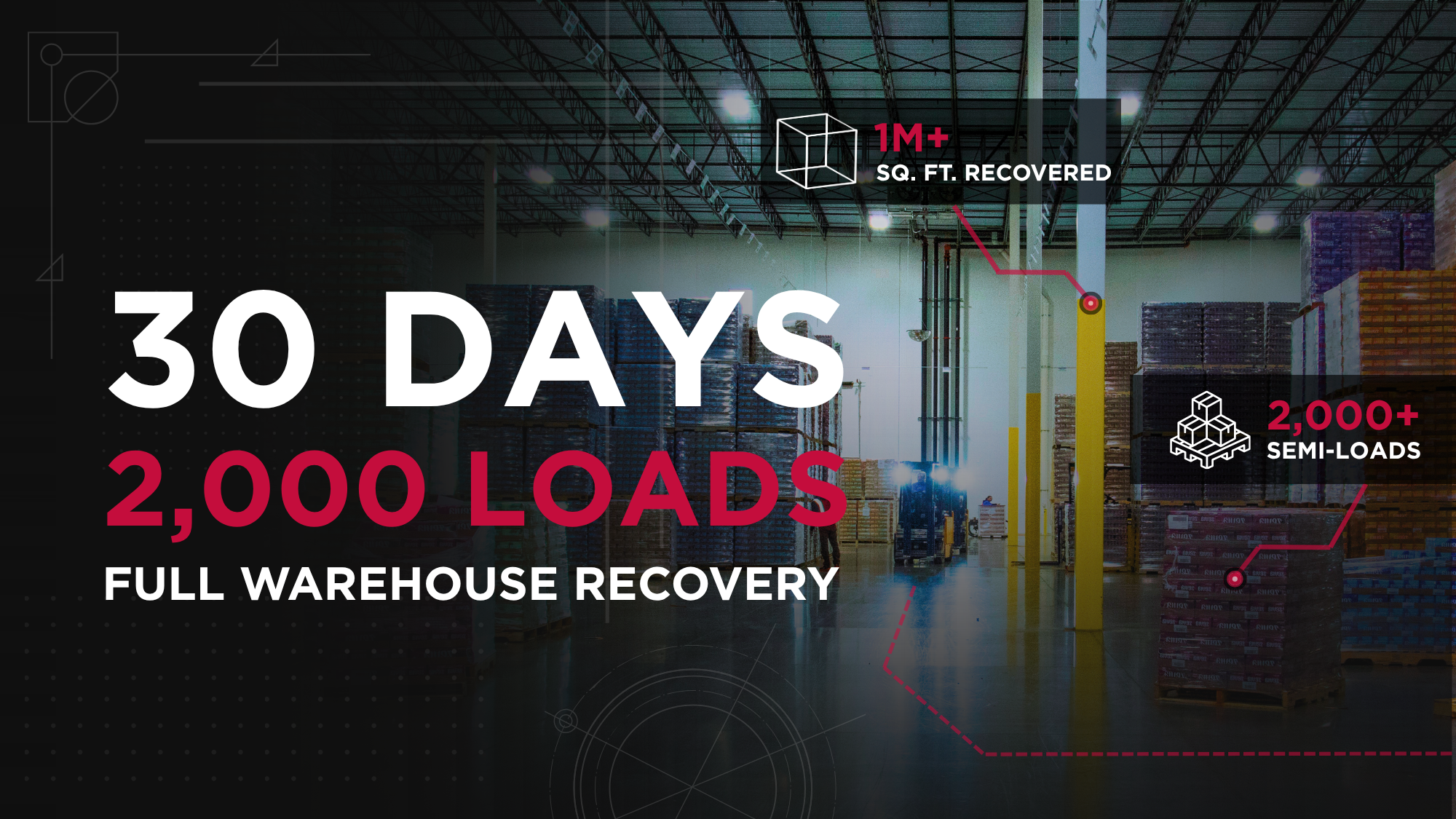
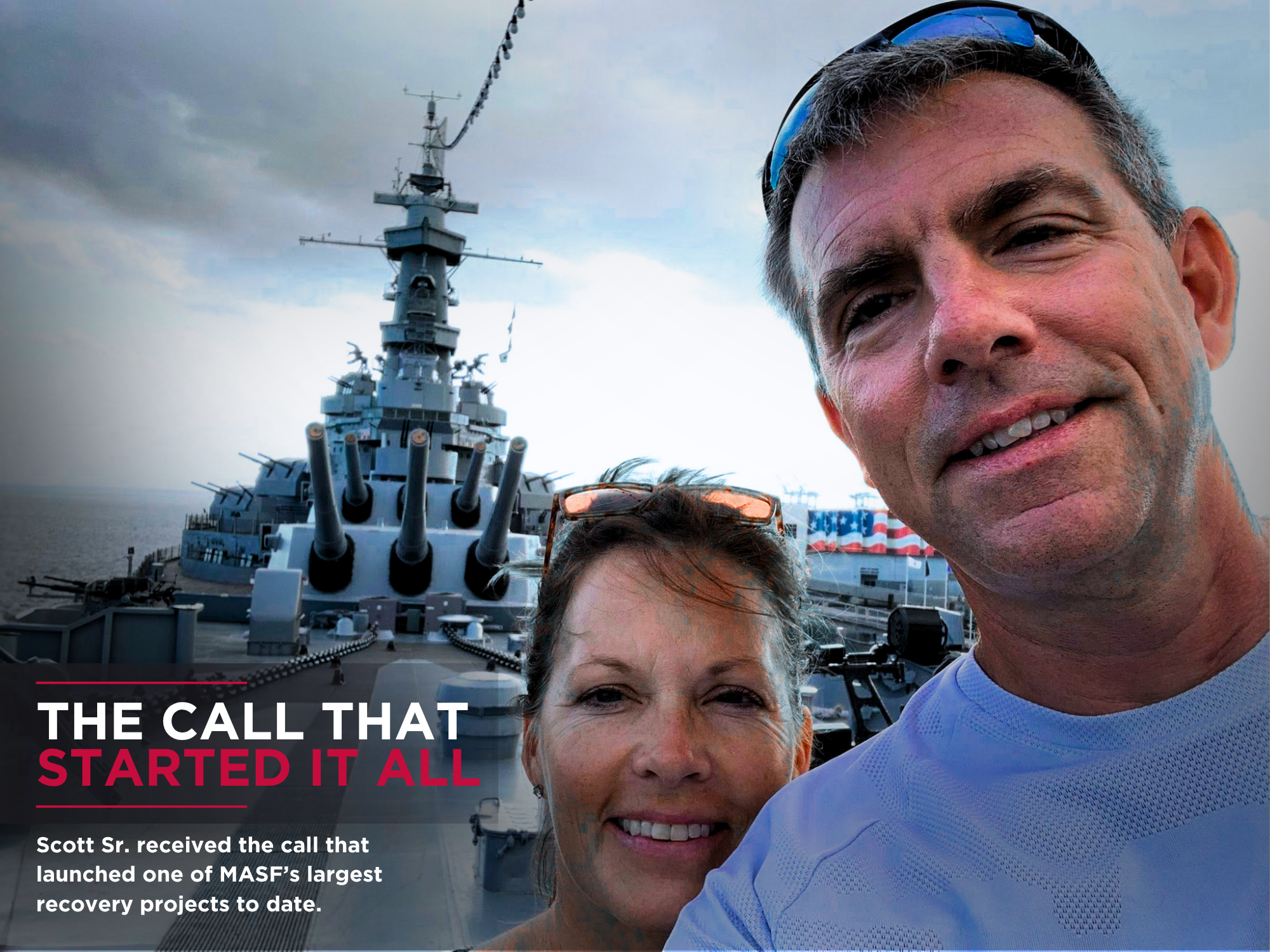
When we at Mid-America Store Fixtures say we’re ready to step in anytime, anywhere, we mean it. It’s that mindset that led to one of the more unusual calls Scott Hoek Sr., our Vice President of Business Development, has taken—fielded while standing on the deck of a World War II battleship. We’re glad he took it, because it led to us helping a client in a major way and created a success story that highlights what MASF is all about.
On the other end of the call was a property manager facing a situation that had quickly escalated beyond a typical tenant issue. Their lessee had defaulted, and after court proceedings, possession of the building had been handed back. What they were left with was a massive third-party warehousing facility, spanning over one million square feet with more than 100 loading docks.
But the building wasn’t empty.
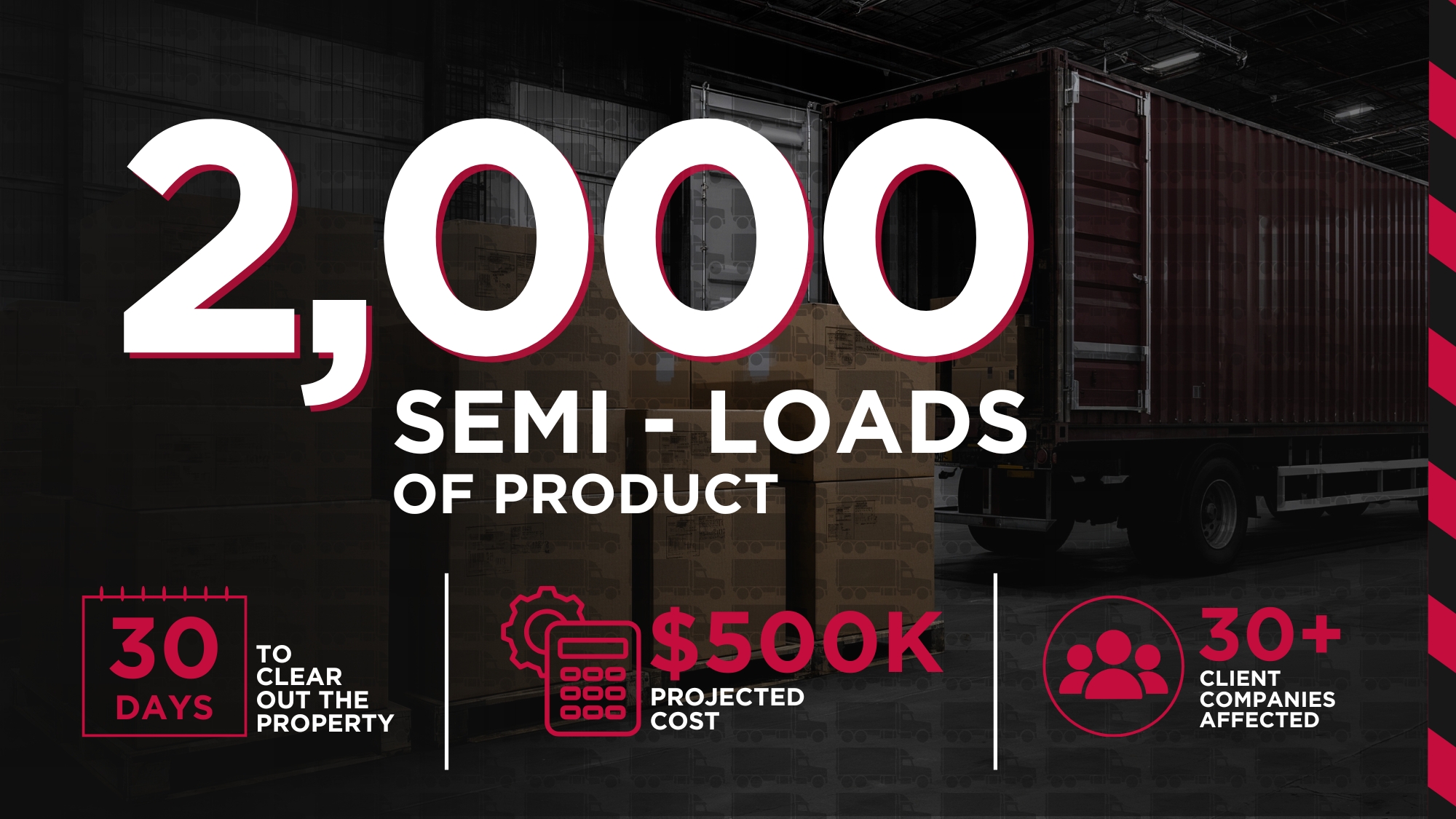
The Problem: Inside sat roughly 2,000 semi-loads of palletized, finished beverage product, belonging to more than 30 different companies. If the logistical headache that can come with that—accounting for every pallet and coordinating with every client—wasn’t enough, everything needed to be removed within one month so the property could be repaired and brought back to market.
From the property manager’s perspective, the outlook wasn’t promising, to say the least. They expected to be responsible for the labor, the logistics, and the cost of clearing it all out, potentially spending up to $500,000 out of pocket.
Fortunately, they called the right partner.
How MASF Made It Happen
How did we handle a decommissioning project of this scale and complexity? The same way we handle every project, guided by our core values: reliability, integrity, and service. The Mid-America Way.
Phase 1: Client Product Removal
The first step was addressing the product itself, which meant more than simply clearing items out of the building. This wasn’t a single-tenant situation. With more than 30 companies storing inventory in the facility, each one had to be contacted and coordinated with individually to ensure their product could be removed efficiently and without confusion.
Instead of leaving our property manager client on the hook for that, our team managed the entire process. From initial outreach to coordinating loadout schedules, we handled the logistics of getting each client’s product out of the building and onto trucks bound for alternative storage locations. At the same time, we maintained detailed documentation for every load that left the facility.
To ensure complete visibility, every two pallets loaded onto a truck were photographed and documented. Each client was given access to a dedicated cloud folder, where they could view real-time updates and verify exactly what was being shipped. This kept all parties aligned and greatly reduced the uncertainty that often comes with a process like this.
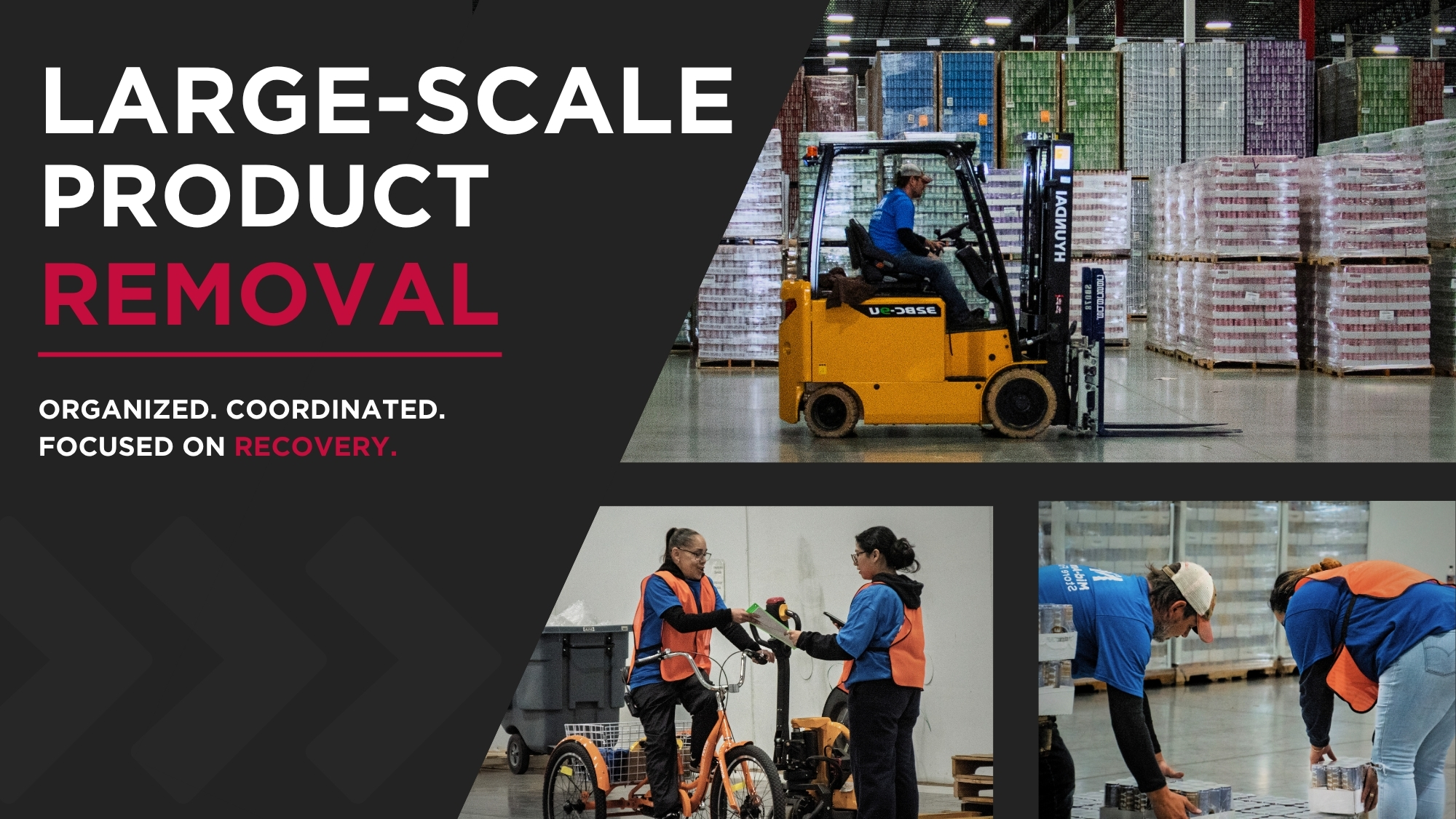
The key MASF difference in this phase came down to accountability and transparency. At this scale, execution alone isn’t enough. What matters just as much is how the work is done.
By building a clear accountability trail and maintaining full transparency from start to finish, we ensured that both our property manager client and each of their individual clients had confidence in the process. Every load was documented, every movement was tracked, and every stakeholder stayed informed.
That level of visibility and organization helps prevent issues before they arise, especially in a project with this many moving parts. It’s the standard we aim for in every project we take on, no matter the size.
Phase 2: Liquidation & Auction of Remaining Assets
Once all the client product had been removed from the facility, the focus shifted to what was left behind. This included a wide range of tangible assets that had effectively become the property of our client following the tenant’s default.
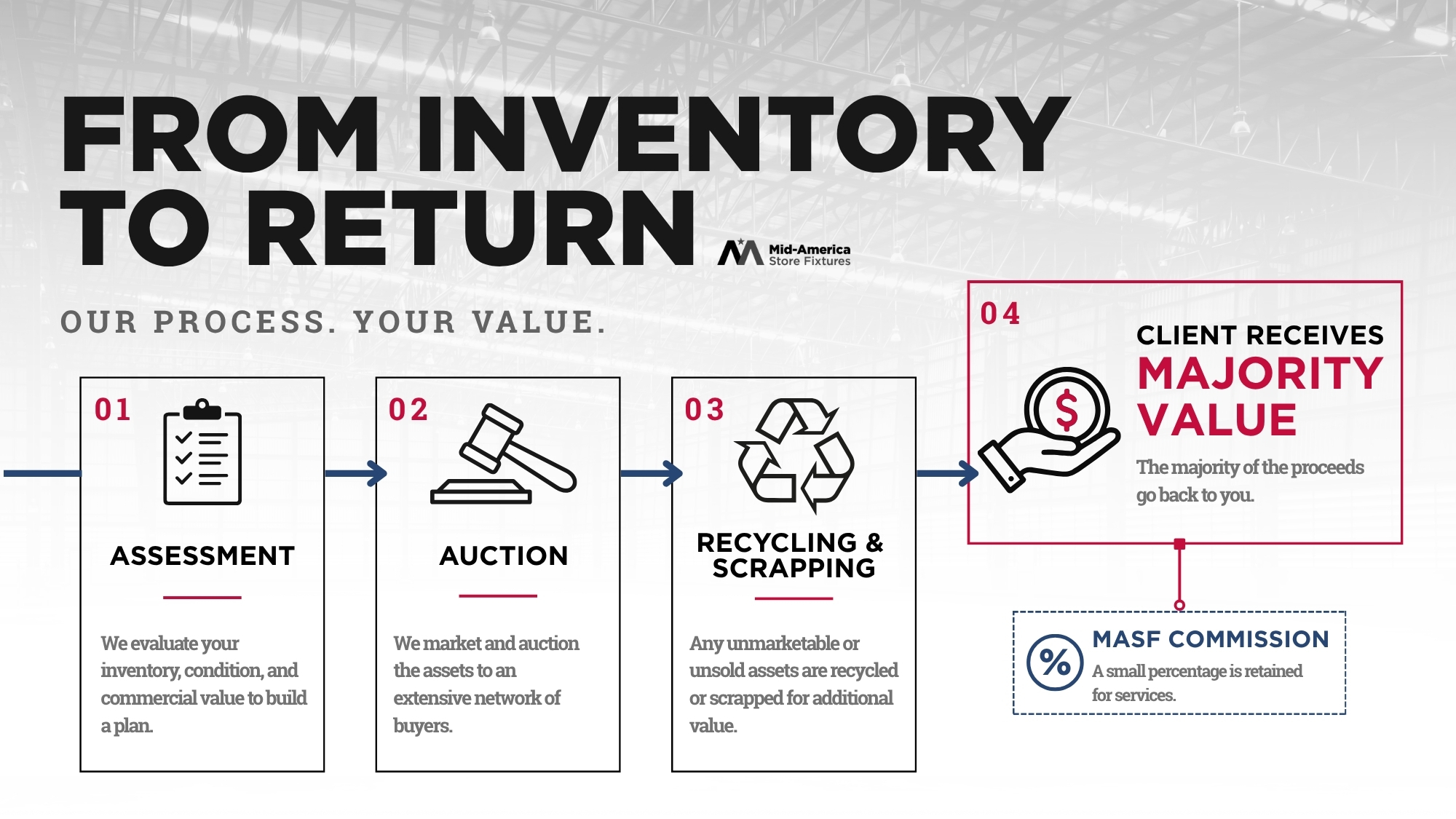
Our team conducted a full assessment of those remaining assets and developed a plan to recover as much value as possible. This included pre-planning an on-site auction to take place after the facility shutdown, allowing us to efficiently sell off any remaining FF&E. At the same time, we managed how costs were allocated and how recovered value was applied, ensuring the financial side of the project worked in our client’s favor.
Another key win for our client was how MASF orchestrated shipping costs. Rather than placing that burden on the property manager, shipping fees were charged directly to the clients whose product was removed. This meant the cost of clearing the building didn’t fall on our client.
Any abandoned equipment was then sold, with a small commission retained by MASF. The remaining proceeds were applied against the overall project cost, further reducing the financial impact of the decommissioning process.
In a previous post, we noted that one of the biggest differences between working with MASF and a general contractor is what happens to the assets left behind. Instead of treating them as waste, we have the knowledge and connections to liquidate fixtures and equipment and recover their value.
That’s the Mid-America difference here: we don’t just clear the space—we look for every opportunity to return value to our client. Every decision we made in this phase was focused on reducing their financial burden wherever possible.
Going the Extra Mile: The Mid-America Difference
As the project moved forward, a few unexpected “side quests” came up along the way. They weren’t required, but they gave us opportunities to go further for our client and demonstrate what the Mid-America Way looks like in action.
Recovering Value Through Recycling
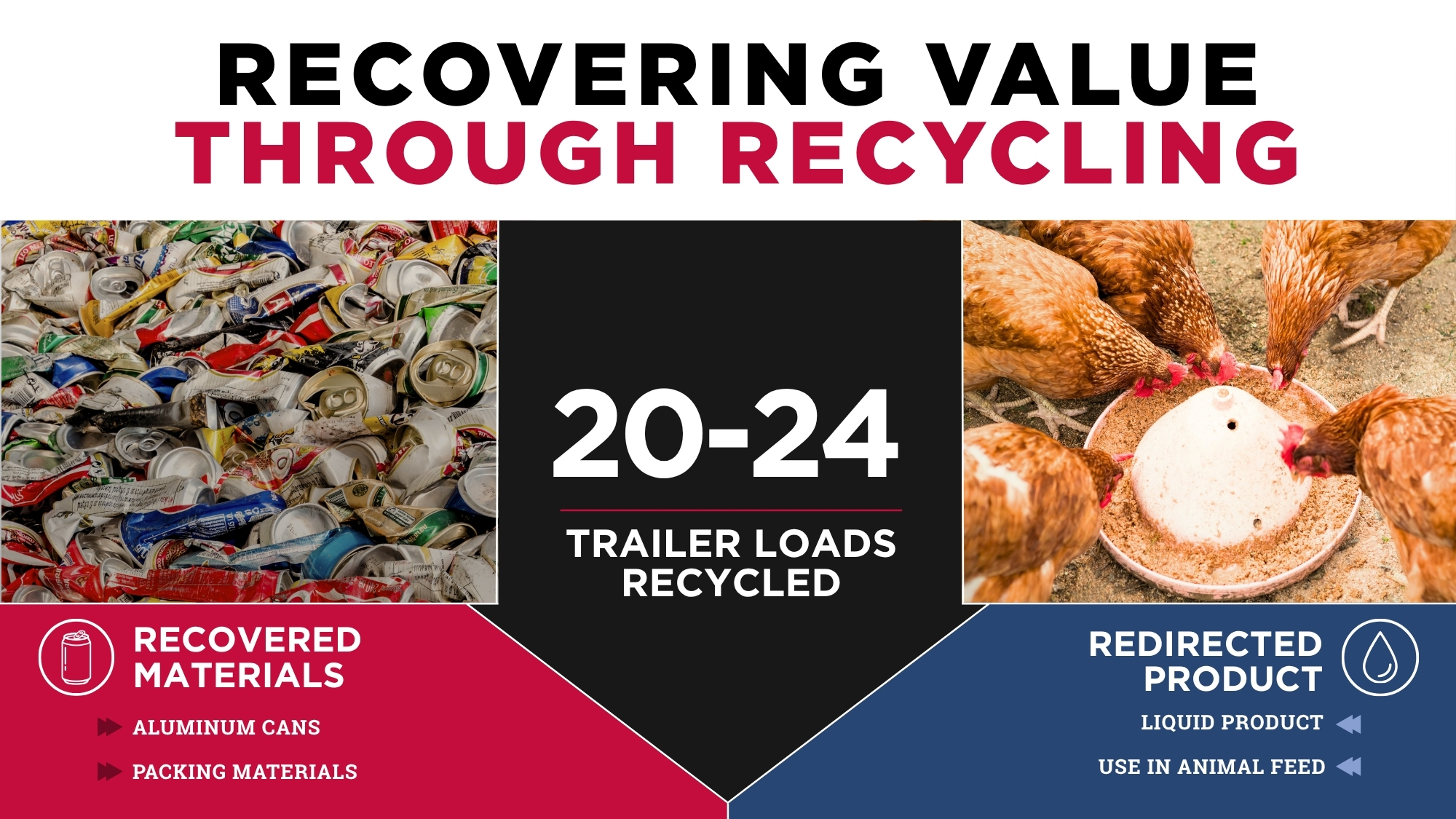
When you’re dealing with a facility of this size, the amount of material left behind adds up quickly. In this case, that included about 20 to 24 trailers’ worth of cardboard, wooden pallets, and aluminum cans that needed to be addressed, whether that meant repurposing or disposal.
As we’ve said, at MASF, we do whatever we can to avoid unnecessary waste. Our team took the extra step to find a better solution. We went out of our way to connect with a recycling partner who could handle the full scope of the material, including extracting the liquid from the beverage product, recycling the containers, and repurposing the liquid itself.
In the end, there was zero waste. Zero. The containers were recycled, and the liquid was converted into animal feed, not only eliminating disposal challenges for our client, but also helping reduce the overall cost and environmental burden of the project.
The Italian Packaging Machine: Going Further for Our Client
Among the assets left behind was a high-end Italian packaging machine. Built to bundle and shrink-wrap beverage products, it was a specialized piece of equipment you don’t come across often, with a lead time of up to four years if ordered new.
It’s not every day a machine like that is sitting idle in a facility that needs to be cleared, and it’s even less common for someone to take the time to figure out what to do with it. No one asked us to.
But at MASF, our core values of integrity and service mean we’re always looking for ways to recover value for our clients. Instead of treating the machine as just another asset to clear out, we took the extra step to reach out to the manufacturer and explore potential options. Through that effort, we were able to connect with a buyer in the U.S. who had a use for the machine.
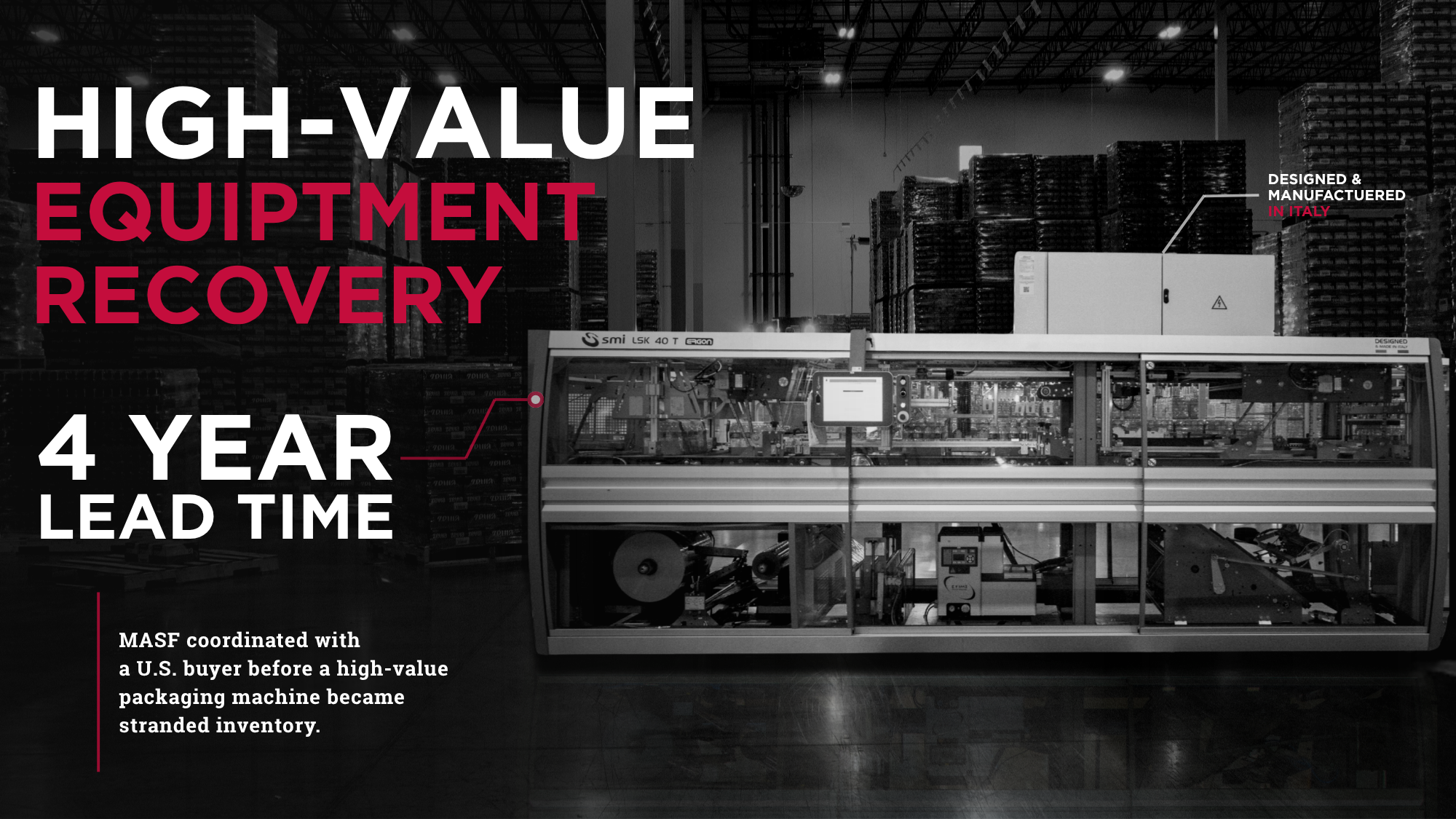
That extra step turned a highly specialized, difficult-to-move asset into a bonus for our client, recovering value that could have easily been overlooked.
Handling the Human Side with Integrity
Another aspect that can get overlooked in a project like this is the human element involved. When the tenant defaulted and walked away from the facility, their operations manager was suddenly out of a job, despite being the person who knew the building, systems, and day-to-day operations better than anyone.
Our commitment to integrity pushed us to handle that situation the right way. Rather than treating it as “not our problem” and moving forward without him, we brought him on in a temporary role to help run the closure. MASF covered his wages and worked closely with him throughout the process.
Not only did this help ensure the project ran more smoothly, given his extensive knowledge of the facility, but it also allowed the closure to be handled in a way that was respectful and professional rather than feeling like an aggressive third-party takeover.
The Result
So, when every part of a project like this is handled with integrity, reliability, and a commitment to service, and when you’re actively looking for opportunities to create value, even when no one asks you to, what does it all add up to?
Instead of writing a check for up to $500K+, which was our client’s biggest concern going into the project, they received over $100,000 from MASF.
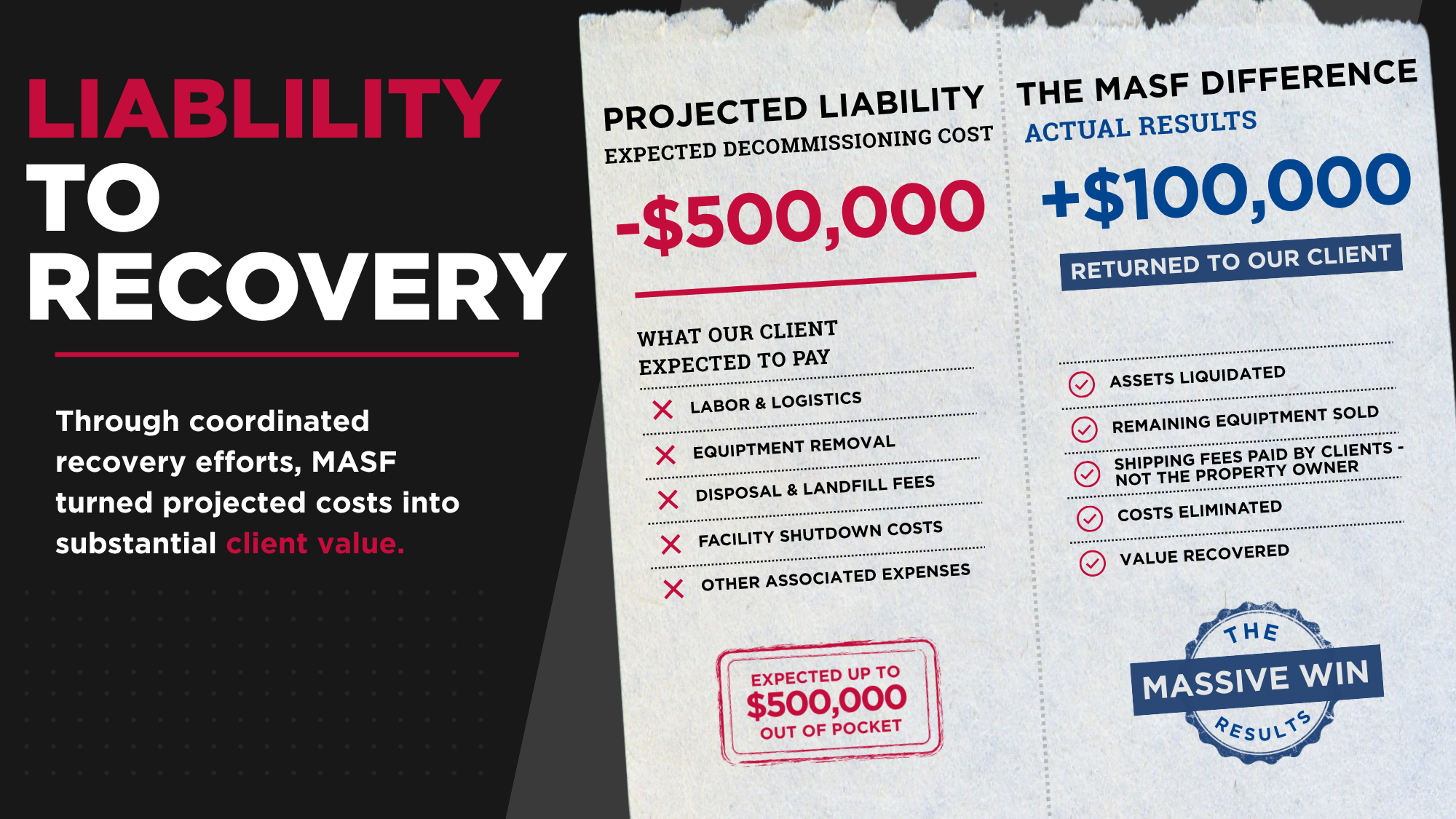
From recycling materials to liquidating assets and finding buyers for specialized equipment, we worked to recover value at every opportunity, leaving no stone unturned. What could have been a costly, complex project instead became one that generated a return—something our client didn’t expect, but something we set out to achieve.
And it didn’t come at the cost of time or quality. Our team was up and running within one week of the tenant abandoning the facility, and by the end of the project, the building was clean, empty, and broom-swept, ready for its next tenant.
This is what the Mid-America Way delivers.
Built for Projects of Any Scale
When people think of MASF, they often think of store fixtures—smaller-scale projects involving a limited range of equipment. But that’s not the full picture of what we’re about. This project involved a million-square-foot bottling facility, specialized equipment, complex logistics, and a tight turnaround, and our team handled every piece of it while securing large and unexpected wins for our client along the way.
If you have a project coming up, no matter the size or complexity, bring it to us. We’ll earn your trust the same way we always do, by doing the job the right way from start to finish.