
West Marine Bankruptcy and Store Closures: What Retailers Can Learn
With store closures and right-sizing operations continuing to be a defining factor of the 2026 retail landscape (as we discussed in our previous State of Retail article), another major retailer has been caught in the current: West Marine has filed for voluntary Chapter 11 bankruptcy protection.
West Marine started out as a small rope supply store in California in 1968, but over the decades that followed, it grew into the nation’s largest specialty retailer of boating supplies, eventually building a footprint of more than 200 stores across the United States and Puerto Rico.
That long record of growth makes the company’s latest chapter especially notable. Although the company plans to remain in operation throughout the restructuring process, it has confirmed that at least 91 stores, nearly half of its current footprint, will be closing their doors.
For a retailer that has spent decades building a nationwide presence, the filing represents a significant shift. So, as we at MASF continue to keep an eye on the ever-changing world of retail, it’s worth examining what led West Marine here and what other retailers should take away from this moment.
Where West Marine Closures Will Hit Hardest
Before examining the broader implications, however, looking at this situation in a more practical way helps establish important context, particularly when it comes to how West Marine’s bankruptcy will be felt by consumers. The local impact is especially notable because, although West Marine’s 91 announced store closures span 28 states, the effects won’t be evenly distributed.
According to West Marine's own store closure directory, the states facing the largest number of closures are Florida, with 18; and Michigan, California, and Washington, with seven each. Together, those four states account for 39 of the 91 announced closures. Florida alone represents nearly one in five affected stores, while Michigan will lose locations in Bay City, Grand Haven, Muskegon, Petoskey, St. Clair Shores, Troy, and Holland, many of which serve communities closely connected to the Great Lakes and boating. From a national perspective, seven stores may seem like a relatively small number, but for customers in those communities, losing a nearby source for boating supplies and equipment will feel much more significant.
Even in states where the total number of closures is small, the local impact can be massive. Maine was the first example: West Marine is closing both of its listed locations, in Portland and Southwest Harbor, wiping out the brand's presence in the state entirely. Maine is no longer alone. Eight more states—Minnesota, Missouri, Nevada, Oregon, Pennsylvania, Tennessee, Vermont, and Wisconsin—are now losing every remaining West Marine location within their borders. In these nine states, customers aren't experiencing the closures as part of a national total. They're watching West Marine disappear from their state altogether.
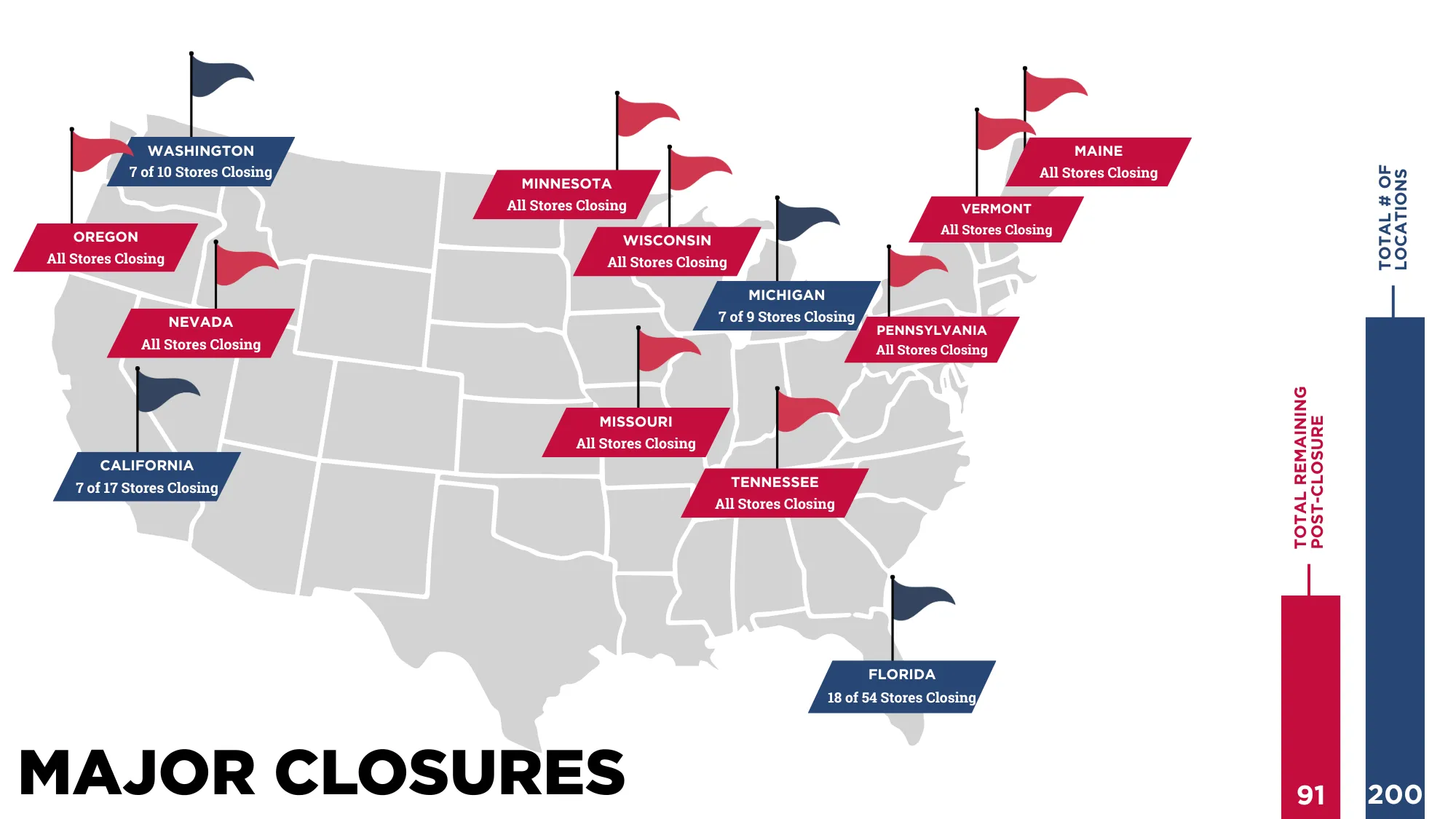
Understanding what this impact really means for customers is important because, from the broader perspective West Marine is taking during this right-sizing period, the total number of closures doesn’t tell the whole story. The real impact is measured market by market, where a handful of closures can reduce access, disrupt established customer relationships, or remove a retailer from a region altogether. This is what the Chapter 11 filing signifies for West Marine customers, and it’s why the situation requires careful examination.
What Led West Marine to Chapter 11?
With the local impact of the closures established, it feels appropriate to take a step back and examine the factors that brought West Marine to this point.
First, it’s important to clarify that West Marine is framing the filing as a strategic right-sizing effort that will allow the company to continue operating into the future. In a statement reported by Fox Business, the company said, “After productive discussions with key advisors, we've reached an agreement to pursue a strategic reorganization that will address our capital structure while maximizing value for all our stakeholders.”
This language is similar to statements made by other retailers going through comparable restructuring efforts, including Macy’s, which we covered in a previous article as a possible blueprint for resizing toward future success. However, that doesn’t mean West Marine isn’t facing serious challenges. In fact, the opposite is true.
In another statement from West Marine, reported by Fast Company, the company cited “supply chain disruptions, extreme weather events, and shifts in consumer behavior” as core factors behind the filing.
Of those factors, consumer behavior is especially worth examining because of its broader implications for the retail landscape. According to a recent consumer study by McKinsey & Company, quoted in an article from TheStreet, “American families report an immediate intention to pull back across most discretionary categories” and “even higher-income consumers are aggressively cutting back on ‘nice to haves.’"
For many West Marine customers, boating and fishing are recreational activities, and the products associated with them often fall into those discretionary categories. With inflation and economic uncertainty currently placing pressure on household budgets, many consumers are cutting back on recreational spending. For a retailer built around boating, fishing, and other marine activities, that shift creates a particularly difficult environment.
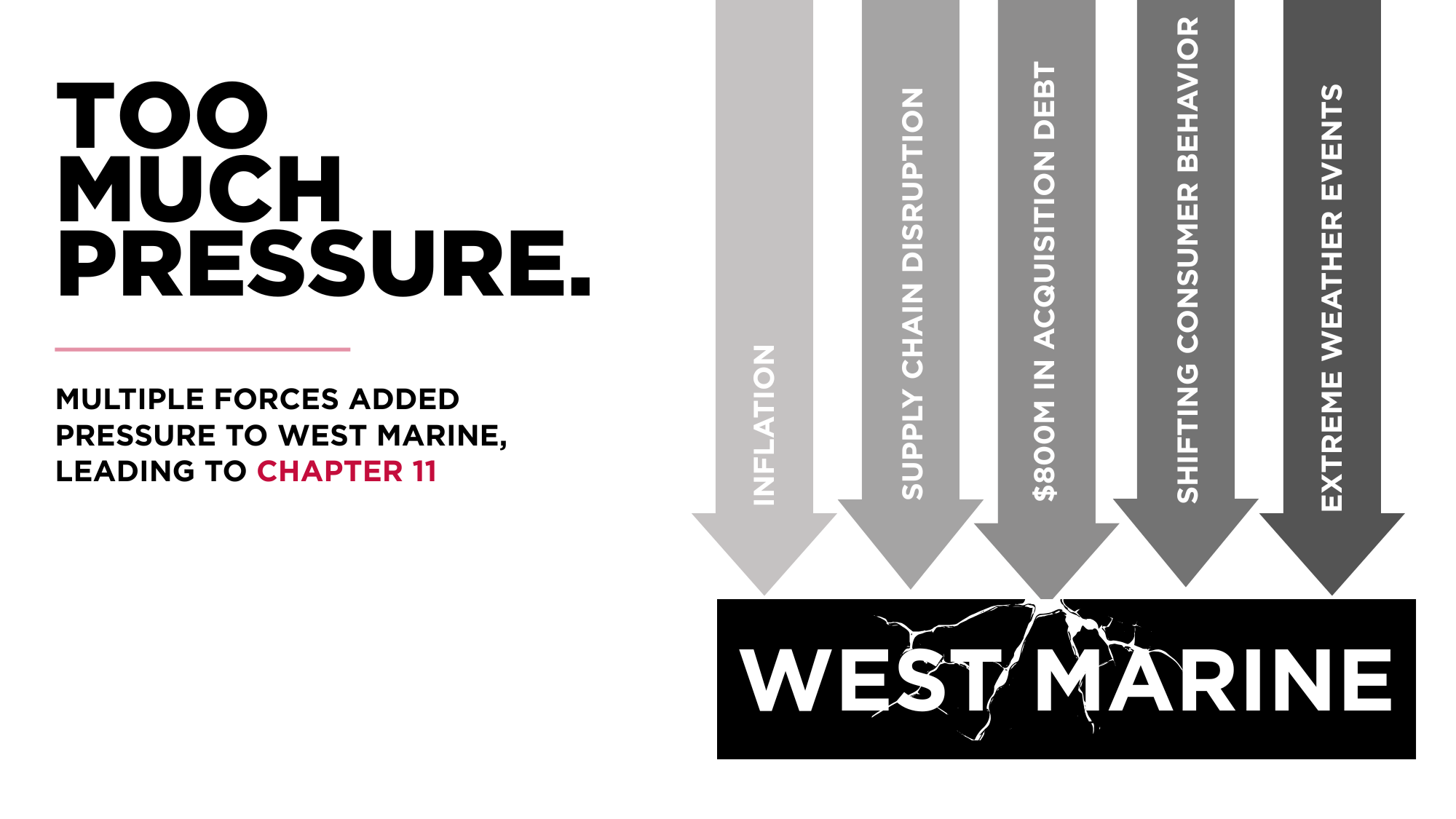
These issues certainly aren’t unique to West Marine. In many of the closures we’ve covered in previous articles, the same pattern has emerged: economic pressures change consumer habits, leading retailers to step back and reconsider their path forward. It’s something that should be, and likely already is, on every retailer’s mind.
The Private Equity Factor
Another factor worth calling out directly is private equity, which we identified in our 2026 State of Retail article as one of the defining forces shaping the retail landscape this year.
West Marine’s relationship with private equity began in 2017, when Monomoy Capital Partners acquired the publicly traded retailer and took it private. In 2021, West Marine was sold again, this time to consumer-focused private equity firm L Catterton. According to Shop Eat Surf Outdoor, L Catterton continues to maintain a controlling stake in the company alongside Oaktree Capital Management.
That ownership history provides important context for the financial position West Marine carried into its Chapter 11 filing. Shop Eat Surf Outdoor also reported that the company entered the filing with approximately $21.5 million in cash and $549.2 million in outstanding debt. While those figures can’t be attributed to private equity alone, West Marine’s ownership history and the financial structures surrounding its acquisitions are relevant parts of understanding how the company reached this position.
Even more notably, those figures came after West Marine had already attempted to improve its balance sheet through two out-of-court restructurings in 2023. According to the same Shop Eat Surf Outdoor article, the second transaction, completed in September, “equitized approximately $660 million of that debt and provided $125 million in new capital.” However, the relief provided by those restructurings wasn’t enough to overcome the company’s remaining debt obligations.
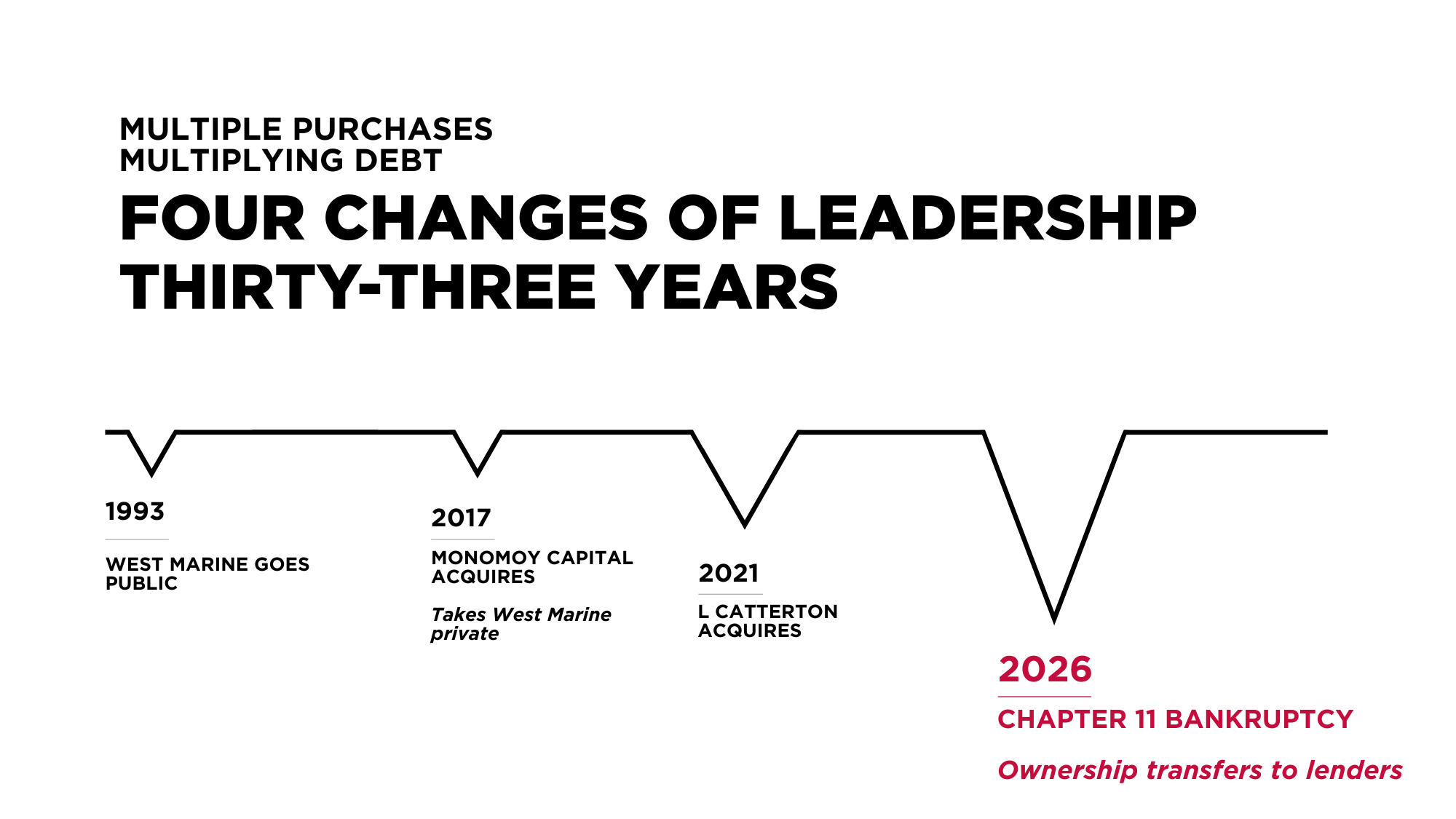
The point of calling this out isn’t to say that private equity alone caused West Marine’s bankruptcy. As the company has explained, supply chain disruption, extreme weather, economic uncertainty, and the resulting shifts in consumer behavior all contributed to its financial difficulties. However, its consecutive private equity acquisitions and substantial debt burden remain important parts of the broader picture.
West Marine’s situation reflects a pattern we’ve seen elsewhere in retail: when a mature company carries significant debt, changing market conditions and operational challenges can become even harder to absorb. Private equity can provide businesses with capital, expertise, and opportunities for growth or restructuring, but the financial obligations surrounding those investments can also leave companies with less flexibility when conditions change. That dynamic shouldn’t be treated as the sole explanation for West Marine’s bankruptcy, but it shouldn’t be overlooked either.
What This Means for Retail: Making Room for What's Next
Finally, as we promised at the beginning, let’s examine what West Marine’s situation could signal for retailers as the industry continues to move forward, sometimes turbulently.
West Marine’s bankruptcy is still an evolving situation. However, a broader lesson is already clear: challenging times don’t have to mean end times. As we discussed in a previous article on bankruptcies, filing for Chapter 11 doesn’t mean just one thing. Yes, it could lead to a full-scale shutdown, but it can also represent a company strategically pivoting, shifting its priorities, and adapting to meet changing consumer demands.
When a retailer is hit with a series of challenges, as West Marine has been, the real work begins. It’s something we at MASF, always keeping an eye on the state of retail, have echoed throughout a series of recent posts: how leaders respond to challenges is everything.
For retailers, investors, and property owners, moments like this reinforce the importance of acting quickly and strategically when a store network needs to change. Closures are disruptive, but they can also create opportunities to streamline operations, refocus on stronger markets, rethink the customer experience, and build a more sustainable path forward. We’ve seen some companies, such as the previously mentioned Macy’s, navigate this process successfully where others have failed.
How West Marine’s leaders handle the situation, and what the company looks like when it emerges, remains to be seen. However, the takeaway for retailers remains the same: as the retail landscape continues to change, the businesses best positioned for the future will be those that know when to adapt, what to preserve, and how to turn disruption into a more strategic next step.