
Widespan Storage Shelving 101: What Is It and Why Use It?
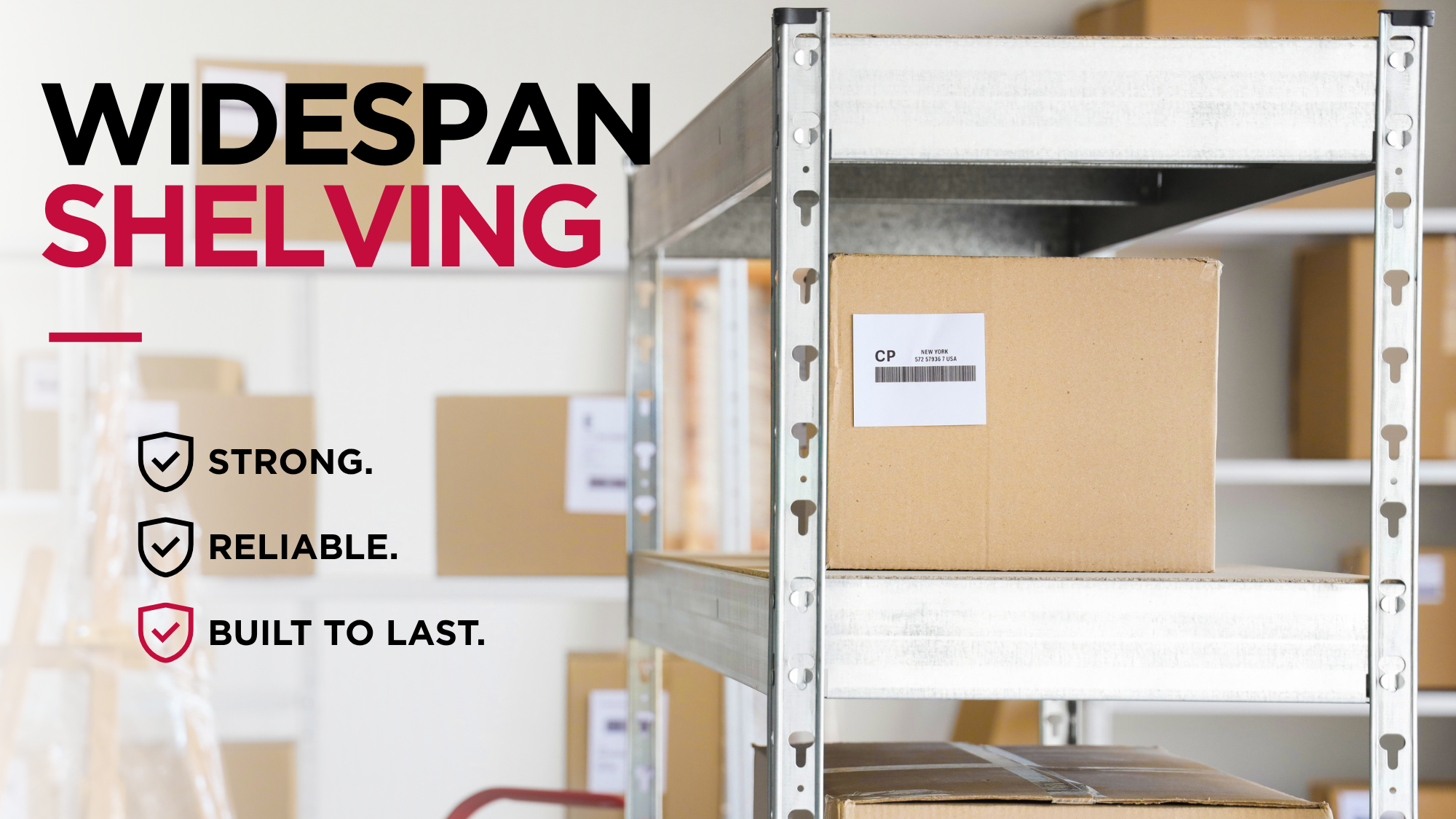
At Mid-America Store Fixtures, we’ve seen many retailers run into a variety of challenges when trying to find the right type of shelving for their stores. One issue that comes up repeatedly is when products don’t quite fit on traditional gondola shelving, whether it’s because of weight, size, or sheer bulk. When businesses start exploring alternatives, options like industrial racking can feel like a step too far. While it may “get the job done” by supporting the excess weight or size, it often doesn’t match the look and feel of their store or align with the customer-facing experience most retail environments are going for.
In these situations, widespan storage shelving, which offers a middle ground between standard retail shelving and heavy-duty racking, is often the solution businesses are looking for.
Some may have found this page already thinking this is the right solution, but questions around fit, flexibility, and sourcing can still hold back a final decision. Whether you’re here to learn more about the solutions widespan shelving provides or to address those concerns, we’re here to help. This breakdown of widespan storage shelving will cover what it is, how it’s used, how it compares to other options, and where it can bring the most value to your space.
What Is Widespan Shelving?
So, to start, what exactly is widespan shelving? What seems like a simple question can trip people up because of its “middle ground” status. Not quite pallet racking, and not quite traditional industrial racking, widespan shelving is a medium-duty storage solution designed to bridge the gap between those systems. It’s built using a combination of uprights, horizontal beams, and shelf supports, with decking typically made from wood or wire grid. This structure allows it to handle larger, heavier items than standard gondola shelving, while still maintaining a clean, retail-friendly appearance.
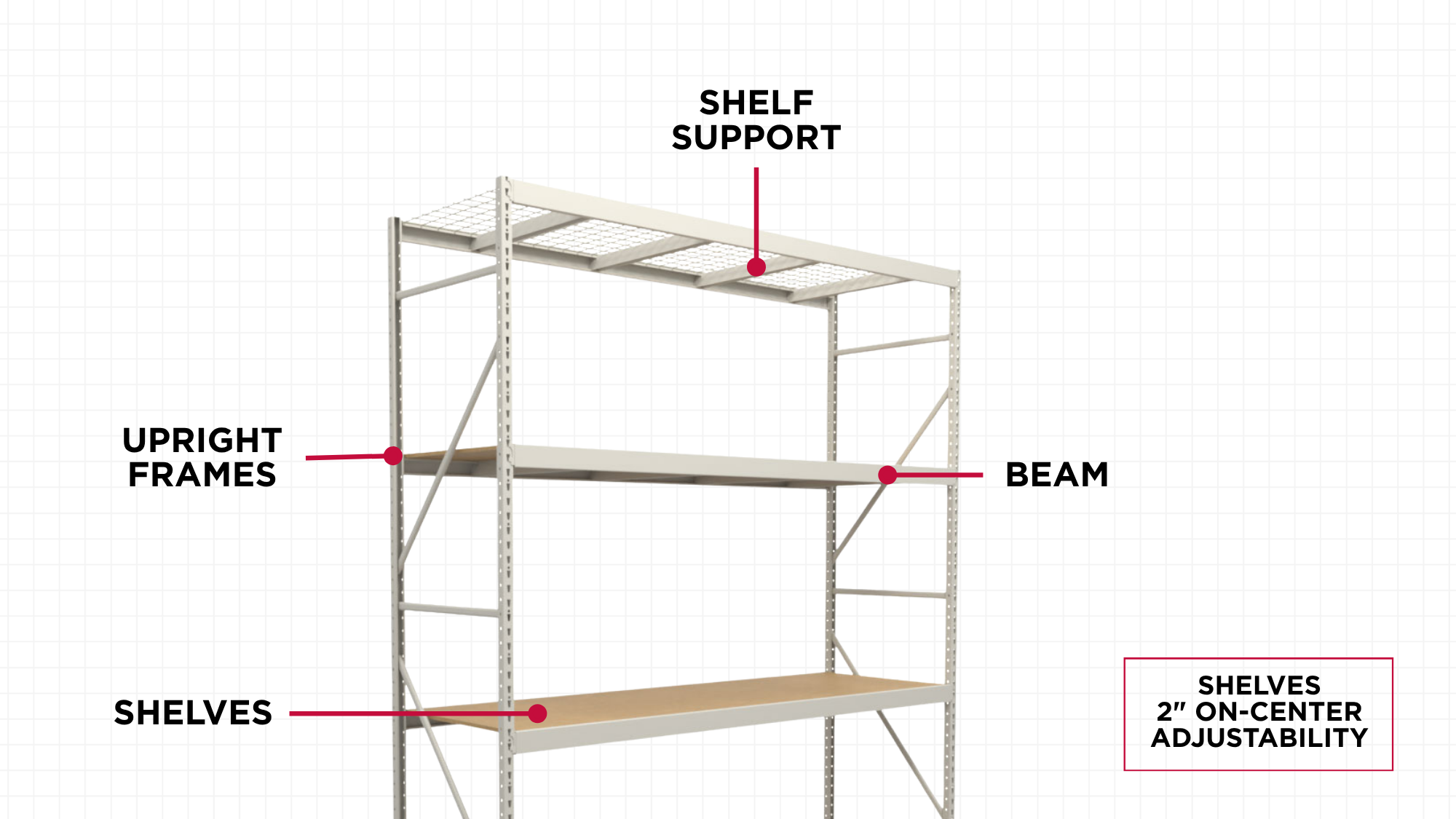
A big reason widespan shelving maintains this retail-friendly appearance, as opposed to traditional industrial racking, is its powder-coated, finished look. In addition, it comes in standard colors like platinum, black, and gray, unlike industrial racking, which typically has a more raw, galvanized steel appearance. Together, these elements allow it to fit into customer-facing environments without disrupting the look and feel of the store.
Another key attribute of widespan shelving is that it’s semi-adjustable, meaning shelves can be repositioned to accommodate different product sizes, and it’s available in a wide range of configurations. Units can be built from relatively short setups to much taller systems, with shelf depths typically ranging from 24 to 60 inches. This makes it a practical option for storing products of varying sizes and weights, depending on your space’s needs.
More directly, let’s take a look at how widespan shelving compares to a couple of its most common alternatives.
Widespan vs. Gondola Shelving
As we already covered, the main differences between widespan and gondola shelving come down to weight capacity and flexibility. Gondola is built for lighter, more standardized products, while widespan can adapt to a wider range of storage needs, including heavier or unusually shaped items. So, what does this look like in practice for stores?
Gondola shelving is the go-to for traditional retail aisles, where products are smaller, easier to stock, and meant to be browsed by customers. It keeps everything organized, accessible, and visually consistent across the floor.
Widespan shelving becomes the better option when products start pushing the limits of what gondola can handle. In sections like paint, pet food, or bulk goods, where items are heavier or don’t fit neatly on standard shelves, widespan provides the strength and flexibility needed to store them effectively. It also works well in backroom storage, where maximizing capacity and adaptability matters more than presentation.
Each has its own advantages, which is why, in practice, many retailers use both—relying on gondola for the majority of their display while using widespan in areas that demand something more heavy-duty.
Widespan vs. S-Series Shelving
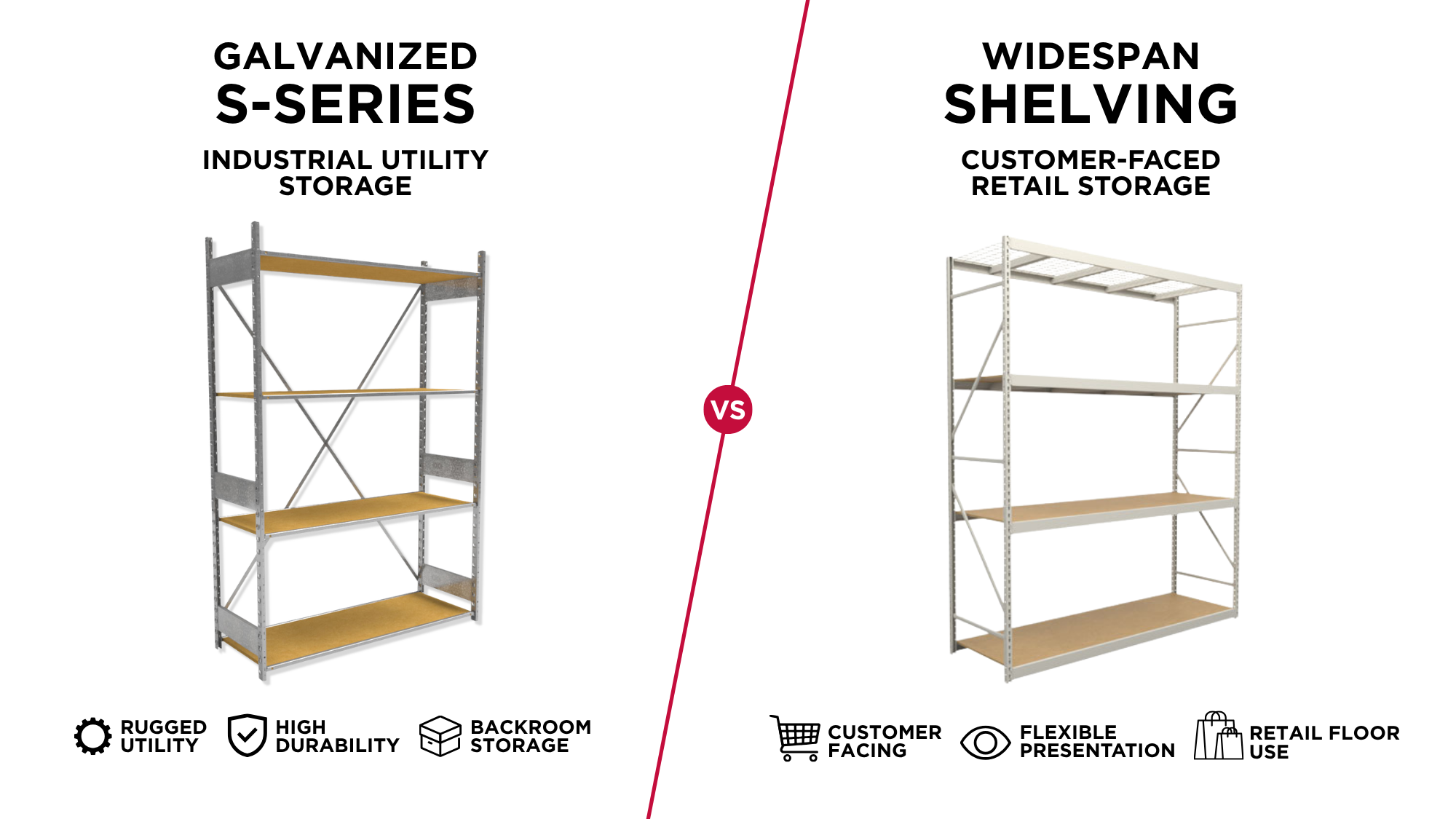
Another alternative worth comparing to widespan is S-Series. S-Series shelving is a lighter-duty, industrial-style system typically used for storage and pick-and-pull applications. It often features a galvanized steel finish, giving it a more raw, industrial look that’s better suited for backroom environments, as most retailers do not want this for their front-of-house shopping experience.
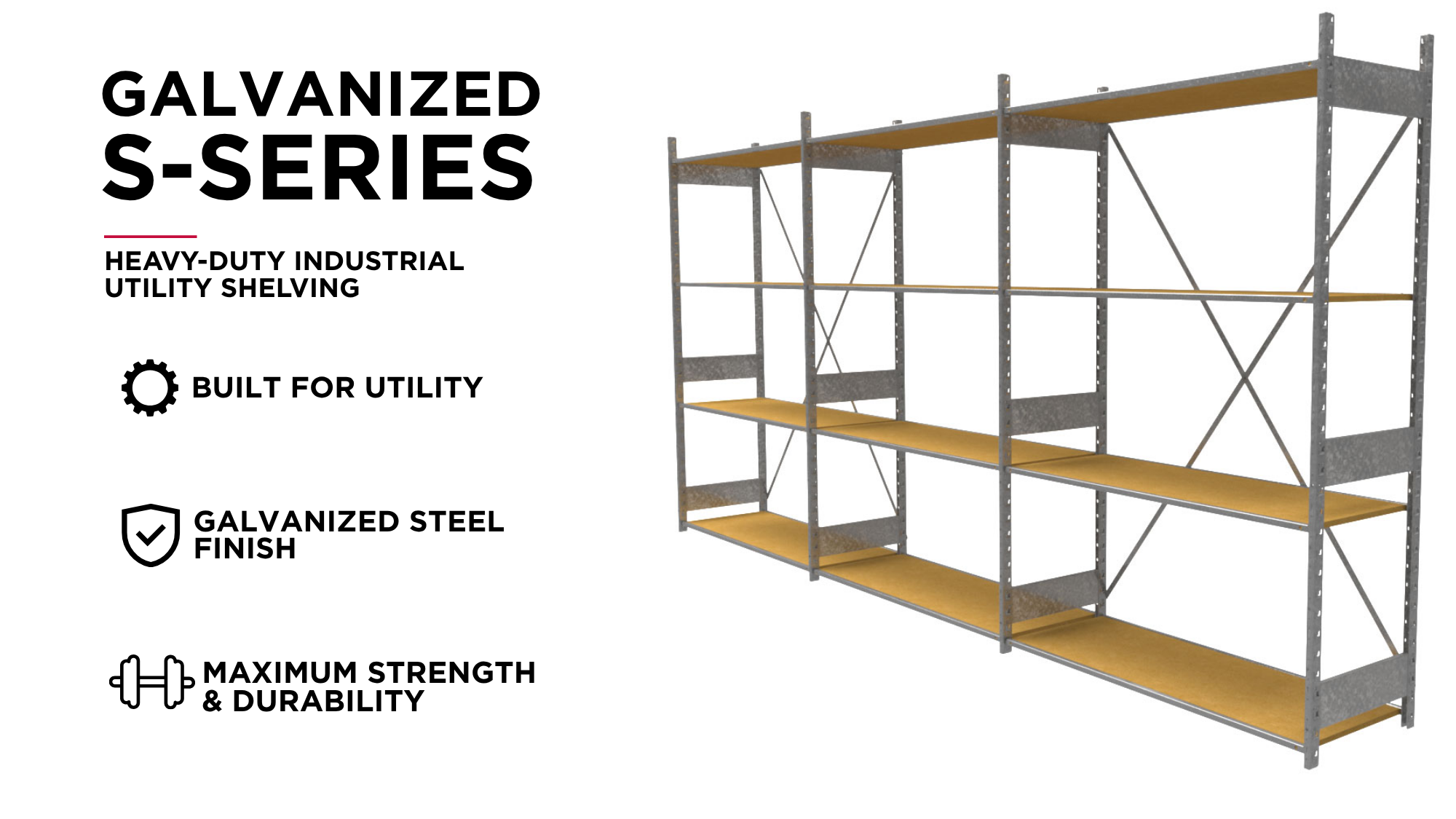
Compared to S-Series, widespan shelving once again offers greater capacity and flexibility, both in backroom storage and in heavier-duty retail sections where standard shelving falls short. While S-Series shelving typically supports around 400 pounds per shelf, widespan can handle significantly more, up to 1200 pounds, making it easier to store heavier or bulkier items. Widespan shelving's beam-and-deck construction, using materials like particle board or wire decking, also allows for more adaptable configurations, making it easier to scale storage based on your needs.
Overall, S-Series works best in tighter, narrow spaces, with depth options like 12, 18, 24, and 30 inches, making it a strong fit for compact backroom storage and pick-and-pull setups. Widespan, as the name suggests, is wider, making it better suited for applications where you need to store heavier items or maximize capacity, whether that’s in larger backroom areas or in customer-facing sections that still require a clean, finished look while supporting excess weight.
Who Uses Widespan Shelving?
Through those comparisons, you likely noticed a pattern in the situations where widespan shelving is used. As a pattern, t’s most often the solution when businesses need to store heavier, bulkier, or unusually shaped items that standard shelving struggles to support. To take this further, let’s look at a few specific examples of who uses widespan shelving, how they use it, and why it makes sense for their space.
For many retailers, widespan is used in both front-of-house and backroom applications. In paint sections, for example, retailers rely on widespan shelving to support the weight of gallons and bulk containers while still maintaining a clean, customer-facing display. Similarly, farm and pet supply stores use widespan for dog and cat food, where large, heavy bags can quickly exceed the limits of traditional shelving.
Auto parts retailers also turn to widespan shelving for both backroom pick-and-pull systems and front-facing displays like oil racking. In these setups, products like cases of motor oil are stored in organized, customer-facing sections, while heavier items like car batteries and larger parts are stored in the back, where they still need to be easily accessible and well organized.
In bulk retail settings, businesses use widespan shelving for larger items like boxed furniture or heavy packaged goods such as 25–50-pound bags of rice, beans, or pet food, where standard shelving can’t reliably support the weight or size of the inventory.
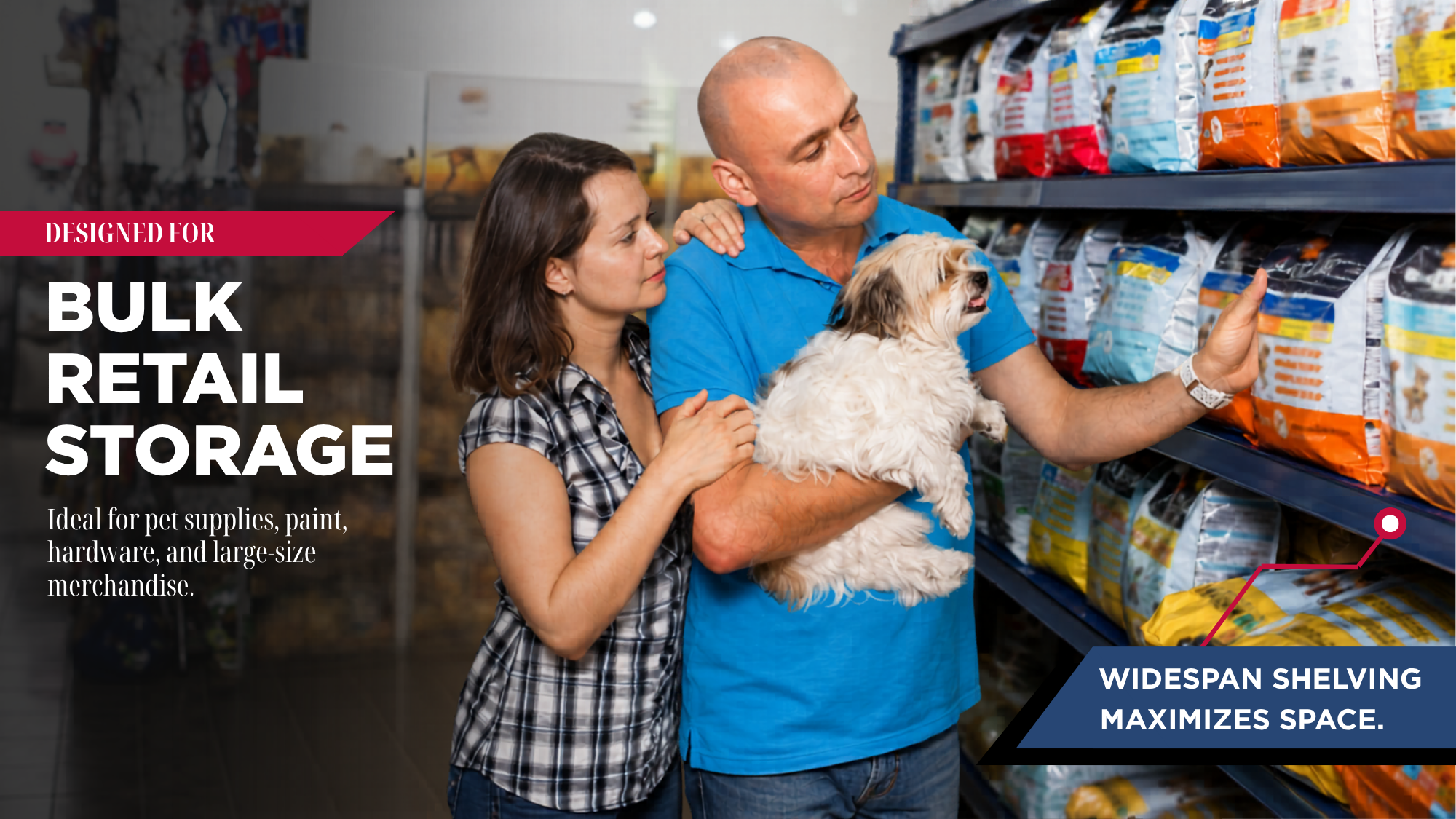
In each of these cases, the decision comes down to the same need: a shelving system that can handle more weight and more variation without sacrificing usability or appearance.
Where to Purchase Widespan Shelving
By now, we hope we’ve given you enough information to determine whether widespan shelving is the right fit for your space. If you’ve decided you’re ready to buy, or want to learn more about where to purchase before making that decision, here are some common options.
Widespan shelving is available through major manufacturers like Lozier and Madix, two of the leading names in retail shelving and storage systems. These manufacturers produce a range of widespan options, but in most cases, their products are purchased through authorized dealers, like us at MASF, rather than direct from the manufacturer.
Because of this, sourcing widespan shelving often comes down to finding the right partner to supply it. Factors like availability, lead times, and the ability to match specific configurations can vary depending on where you purchase. Naturally, we believe MASF offers strong solutions to these challenges and is a great partner to buy from—but don’t just take our word for it. Let’s take a look at what we do specifically that helps our partners succeed.
The Mid-America Way: Why Ordering from MASF is Different
Everything we do at Mid-America Store Fixtures is rooted in the core principles of The Mid-America Way: reliability, integrity, and service. So, what does that mean when it comes to widespan shelving?
One of the biggest factors for many retailers is lead time, and this is an area where we stand out. If we have widespan shelving readily available in our inventory, we can often have it out the door in as little as 7 days. Compared to manufacturer lead times that can stretch up to 12 weeks due to supply chain challenges, that speed can make a significant difference in your operations.
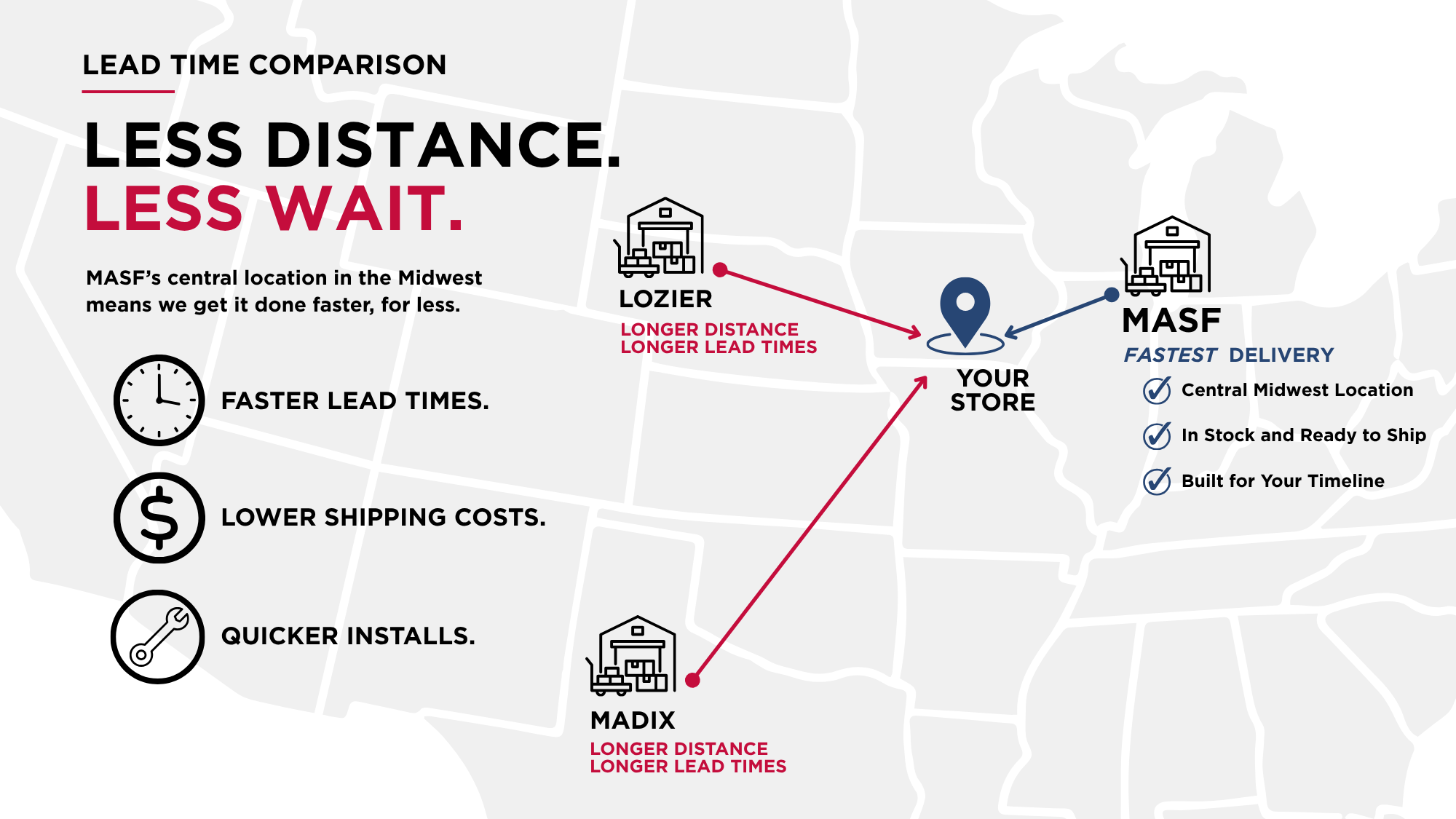
That speed is possible because of how we source and manage inventory. We stock widespan components in-house, but we also maintain a direct relationship with Lozier, allowing us to source additional materials more quickly when needed. In addition, we offer both new and used widespan shelving, with a strong inventory of used options that can help reduce costs and shorten timelines. If your project requires something more specific, we can also work directly with our manufacturer partners to help meet those needs.
Quality is another area where we don’t compromise. Widespan shelving is built to be durable, but we still take extra care of what we offer. We do not carry units that show signs of structural wear, such as bowing from overloading, and we carefully evaluate materials like particle boards to ensure they meet our standards. Across all of our shelving, we maintain a quality level of grade 7 or higher on our internal scale.
We work hard every day to make sure that when someone chooses to partner with us, they experience the principles of The Mid-America Way in everything we do, from lead times and quality to going the extra mile to help you get exactly what you need.
Don't Make Tough Decisions Solo
While we certainly hope you choose to partner with us at MASF for your widespan shelving needs, what’s more important is that you feel fully informed and confident in your ability to make the right decision for your space. We hope that, through this guide, we’ve given you the information needed to select the right shelving for your retail operation's unique needs.
Of course, if you do choose to buy from us, or have additional questions you’d like answered, feel free to reach out. We’re more than happy to help you navigate any challenges you’re facing and find the right solution for your needs.